

RENU SURESH
Expert
Published on: Jul 30, 2026
What is a Cloud Kitchen? How It Works, Benefits, and How to Start a Cloud Kitchen in 2025
The food industry is evolving rapidly, and one of the most groundbreaking innovations in recent years is the cloud kitchen. Also known as a ghost kitchen, dark kitchen, or virtual kitchen, this concept has revolutionized the way food businesses operate. But what exactly is a cloud kitchen, and how can you start one that thrives in a competitive market? In this comprehensive guide, we will delve into everything you need to know about starting a Cloud Kitchen – from understanding the business model to practical steps for setting up, ensuring operational efficiency, and driving success.
What is a Cloud Kitchen?
A cloud kitchen is a food service business that operates without a traditional storefront or dine-in area. Unlike conventional restaurants that rely on foot traffic and on-site dining, a Cloud Kitchen serves customers exclusively through food delivery platforms like Swiggy, Zomato, or Uber Eats. This business model allows entrepreneurs to focus on the kitchen operations while partnering with delivery platforms to handle customer acquisition and delivery logistics.
How does a Cloud Kitchen work?
- A Cloud Kitchen is a modern restaurant model that focuses solely on food delivery without a physical storefront:
- Delivery-only concept: Operates solely through food delivery platforms, with no physical dining area.
- Commercial space: Uses a commercial kitchen optimised for food preparation and production.
- Order process: Orders are placed via mobile apps or websites, then prepared, packaged, and dispatched for delivery.
- Cost efficiency: Avoids high costs associated with real estate and dining spaces, making it more affordable.
- Operational simplicity: Easier to manage and operate compared to traditional restaurants.
What Makes a Cloud Kitchen Different?
Cloud Kitchens offer a unique and cost-effective alternative to traditional restaurants, bringing several key advantages.
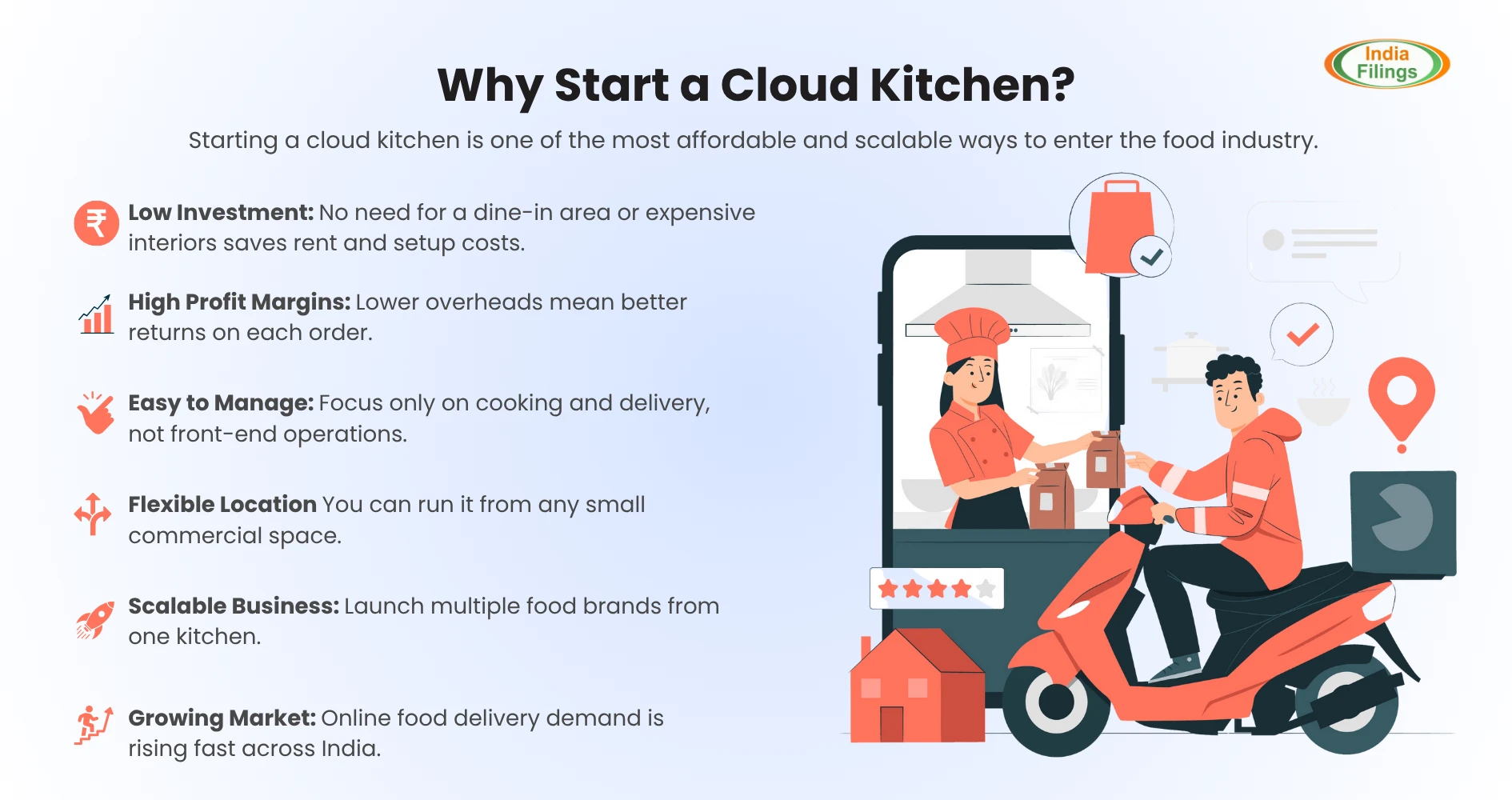
- Lower Start-Up Costs: With a Cloud Kitchen, you can start your food business with significantly reduced expenses. There's no need to invest in expensive real estate, utilities, or front-of-house staff, making it a more affordable option for entrepreneurs.
- Flexible Location: Cloud Kitchens can operate from various locations, such as warehouses or food booths, offering greater flexibility in where you choose to set up your business. This allows you to enter diverse markets without the constraints of a traditional restaurant space.
- Reduced Risk: By eliminating the high overheads of a brick-and-mortar establishment, Cloud Kitchens lower the financial risk for entrepreneurs. This makes them an attractive option for those looking to enter the food industry with a safer investment.
- Wider Reach: Cloud Kitchens have the ability to serve customers in remote or underserved areas. With the rise of food delivery platforms, they can reach a broad audience, far beyond the limitations of a physical restaurant, making it easier to tap into new markets.
Is the Cloud Kitchen Business Profitable?
The cloud kitchen industry has gained substantial momentum in recent years. According to market research, the global cloud kitchen market is growing at an exponential rate. With the increasing demand for online food delivery and the shift in consumer preferences towards convenience, the Cloud Kitchen model offers an attractive opportunity for entrepreneurs to enter the food industry without a significant initial investment.
In countries like India, the cloud kitchen market has seen massive growth due to the rise of food delivery apps and changing consumer behavior. According to industry reports, the Cloud Kitchen market in India is expected to grow at a CAGR of 17.5% over the next five years, making it a lucrative business model for anyone looking to enter the food industry.
Market Trends in Cloud Kitchens
- Rise of Online Food Delivery: The increase in demand for food delivery services is a key driver for Cloud Kitchens. Consumers are increasingly opting for convenience and the ability to order from a wide variety of cuisines at the touch of a button.
- Diverse Cuisine Options: Cloud Kitchens can experiment with different cuisines, offering niche food options or fusion concepts that attract a wide range of customers.
- Technology Integration: Cloud Kitchens rely heavily on technology, from online ordering platforms to kitchen management software. This ensures smooth operations and efficient handling of customer orders.
Most Common Types of Cloud Kitchens
Cloud Kitchens come in different models, each catering to specific business needs and operational goals. This flexibility has been a major driver behind their growing popularity. Here are the most common types:
Multi-Brand Kitchen
In this model, a single kitchen facility houses multiple restaurant brands or virtual food concepts. It’s a cost-effective option for startups or entrepreneurs who want to test multiple cuisines and brands without incurring high setup costs.
Brand-Owned Cloud Kitchen
This is a dedicated setup owned and managed by a single restaurant brand. It handles delivery and takeaway orders exclusively under its own name. While it offers full control over quality, branding, and operations, it also requires a higher investment, especially in marketing and brand visibility.
Outsourced Kitchen
Here, a third-party service provider takes care of kitchen operations, equipment, and logistics, allowing restaurant owners to focus primarily on menu creation, food quality, and marketing. This model minimizes operational burdens while maintaining efficiency.
Commissary Kitchen
Also known as shared or aggregator kitchens, these are fully equipped spaces offered by food delivery platforms or kitchen operators for rent. Restaurants use these facilities to prepare food for delivery, reducing upfront costs and benefiting from the aggregator’s infrastructure and delivery network.
Who Uses Cloud Kitchens?
Cloud Kitchens are transforming the food industry by offering a flexible, low-cost way to enter or expand in the delivery market. They are used by a wide range of businesses, from startups and established restaurants to caterers, delivery services, and virtual brands - all looking to reach more customers without the overhead of a traditional restaurant setup.
- Entrepreneurs and Startups: Cloud Kitchens offer a low-cost entry point for new businesses in the food delivery market, making them attractive to entrepreneurs looking to minimize upfront investment.
- Established Restaurants: For established restaurants, Cloud Kitchens allow them to expand their delivery services without the need for additional dine-in space, increasing their revenue potential.
- Food Delivery Services: Platforms like Uber Eats, DoorDash, and Zomato partner with Cloud Kitchens to provide customers with a wide variety of food options and ensure faster deliveries.
- Caterers and Event Planners: Cloud Kitchens are a cost-effective solution for catering large events, allowing businesses to prepare food without the overhead of maintaining a traditional kitchen.
- Virtual Brands: Businesses that operate exclusively online use Cloud Kitchens to launch multiple brands and menus, catering to different customer preferences while maximizing reach.
Benefits of a Cloud Kitchen
A Cloud Kitchen offers multiple advantages for entrepreneurs and food businesses aiming to thrive in the online delivery space.
- Cost-efficient: Cloud Kitchens offer a cost-effective way to enter the food business by eliminating expenses such as building rents, inspections, and dine-in facilities.
- Reduced Expenses: Shared facilities and administrative services help lower overhead costs, including utilities, maintenance, and staff wages.
- Enhanced Delivery: Since Cloud Kitchens are designed for food delivery, they streamline delivery logistics, opening up new revenue opportunities.
- Focus on Core Tasks: With tasks like health inspections, equipment repairs, and facility management handled by the Cloud Kitchen, you can focus on food preparation and customer satisfaction.
- Wider Customer Reach: By leveraging delivery apps and social media marketing, Cloud Kitchens can expand their brand visibility, reaching a larger audience.
Disadvantages of Cloud Kitchens
While Cloud Kitchens offer many benefits, they also come with certain challenges that businesses must consider.
- Heated Competition: The online marketplace for Cloud Kitchens is crowded, and standing out among numerous competitors on delivery apps can be challenging.
- Lack of Walk-in Traffic: Without a physical storefront, Cloud Kitchens miss out on customers who prefer dining in or those who decide to visit a new place spontaneously.
- Location Constraints: The location of the kitchen impacts the delivery radius and ultimately the potential customer base.
- Quality Control: Ensuring food quality during delivery can be challenging, as it depends on factors like delivery drivers' punctuality and handling.
- Packaging Challenges: Proper packaging is crucial to ensure food safety and quality, but sourcing the right packaging can be expensive and difficult.
Licenses and Permits Required for Starting a Cloud Kitchen
When planning to start a Cloud Kitchen, it's crucial to ensure that you acquire all the necessary licenses and permits to operate legally and maintain compliance with government regulations. Here's an overview of the key licenses and permits required:
1. FSSAI License
To legally operate a Cloud Kitchen in Chennai, you must obtain an FSSAI (Food Safety and Standards Authority of India) license. This license ensures that your kitchen adheres to food safety standards and hygiene regulations. It is mandatory for any food business, including Cloud Kitchens, to ensure the quality and safety of the food served to customers.
Apply for your FSSAI License online with IndiaFilings!
2. Goods and Services Tax (GST) Registration
For a Cloud Kitchen, registering for GST is a must. This registration allows your business to collect and remit taxes on sales, ensuring legal compliance. Without GST registration, you cannot charge GST on your food orders, and this may lead to tax-related issues. Registering for GST is essential for smooth operations and to avoid any future legal complications.
Get your GST Registration done easily with IndiaFilings and stay 100% compliant!
3. Local Trade License
A local trade license issued by the municipal corporation is mandatory to operate a cloud kitchen. This license ensures that your business complies with the local regulations and zoning laws. For Cloud Kitchens operating in Chennai, you must obtain this license from the Greater Chennai Corporation, which ensures that your business follows the required operational guidelines and is compliant with the city's regulations.
Apply for your Trade License through IndiaFilings and start your Cloud Kitchen legally!
4. Fire Safety Certificate
A fire safety certificate is essential for ensuring your Cloud Kitchen adheres to fire safety regulations. This certificate ensures that your kitchen is equipped with the necessary fire-fighting equipment and safety measures. It's important to have the proper safety systems in place to protect your staff, customers, and property in case of a fire emergency.
Get your Fire Safety Certificate with the help of IndiaFilings’ compliance experts!
5. Pollution Control Board Permissions
Depending on the scale and type of operations, you may need to obtain Pollution Control Board permissions. This is particularly necessary if your cloud kitchen operations have a significant impact on the environment, such as waste disposal or air quality concerns. You can obtain the necessary permissions from the Tamil Nadu Pollution Control Board to ensure that your Cloud Kitchen operates in an environmentally responsible manner.
Must Read: Important Government Approvals Required for Business
By ensuring that your cloud kitchen meets all these licensing and permit requirements, you can operate legally and in accordance with government regulations, ensuring a smooth start for your business. Let’s now move forward and explore how to set up your Cloud Kitchen and run it efficiently.
How to Start a Cloud Kitchen: Step-by-Step Guide
Here’s a step-by-step guide to help you set up your own Cloud Kitchen successfully — from planning and licensing to marketing and scaling your business.
-1762745781.webp)
Step 1: Research and Market Analysis
Before diving into the Cloud Kitchen business, thorough research and market analysis are essential. Understanding your target audience, location, and competition is key to ensuring success.
- Research the Competition: Identify other Cloud Kitchens in your target area and analyze their menu, pricing, and delivery methods. This will give you valuable insights into what works and what doesn't.
- Target Audience: Understand the preferences of your potential customers. Are they looking for quick meals, healthy options, or indulgent treats? Tailoring your menu to meet customer demands can help differentiate your Cloud Kitchen from competitors.
- Location Analysis: Though Cloud Kitchens don't require a physical storefront, the location of your kitchen still matters. Being close to high-demand areas or delivery hubs can reduce delivery time and improve customer satisfaction.
Step 2: Plan Your Cloud Kitchen Business Model
Once you've conducted your research, it's time to plan your Cloud Kitchen business model. This includes defining the following elements:
- Menu: The food you serve is crucial to your success. Keep the menu simple and focused on popular or niche items that are easy to prepare and deliver. Consider offering meal combos, lunch boxes, or a specific cuisine (e.g., Italian, Indian, healthy bowls, etc.).
- Pricing Strategy: Cloud Kitchens typically operate on a low-cost, high-volume model. Price your menu items competitively to attract a broad customer base while maintaining healthy margins.
- Delivery Partnerships: Partnering with delivery platforms like Zomato, Swiggy, or Uber Eats is vital to driving sales. Make sure your kitchen is set up to handle high volumes of orders quickly and efficiently.
Step 3: Obtain Licenses and Permits
Just like any other food business, operating a Cloud Kitchen requires specific licenses and permits. The required licenses may vary depending on the country and local regulations, but some of the most common ones include:
- FSSAI License: In India, the Food Safety and Standards Authority of India (FSSAI) license is mandatory for any food business.
- Health and Safety Permits: Ensure that your kitchen meets local health and safety regulations, including hygiene standards.
- GST Registration: If your Cloud Kitchen's turnover exceeds the prescribed threshold, GST registration will be required.
Step 4: Set Up Your Cloud Kitchen
With the legalities sorted, the next step is setting up the physical infrastructure for your Cloud Kitchen. This includes:
- Selecting a Location: Choose a location with easy access to delivery routes and a dense population. Your kitchen should be centrally located to ensure fast deliveries.
- Kitchen Equipment: Invest in high-quality kitchen equipment such as ovens, stoves, refrigerators, and prep stations. The equipment should match the type of food you plan to serve.
- Sourcing Raw Materials and Packaging: Source fresh ingredients like vegetables, spices, meats, and grains from reputable suppliers. Ensure they follow hygiene standards and deliver on time to avoid disruptions. Packaging is a crucial element in the Cloud Kitchen business. Consider using eco-friendly packaging materials to cater to environmentally conscious customers. Packaging should also be sturdy to prevent food spillage during delivery.
- Technology Integration: Integrate your kitchen with delivery platforms, ordering apps, and kitchen management software. This helps streamline operations, track orders, and manage inventory efficiently.
Step 5: Cost Considerations and Procurement Strategies
Setting up a Cloud Kitchen involves various upfront and ongoing costs. It's important to carefully plan your budget and procurement strategies to minimize expenses and maximize profitability.
- Compare Prices from Different Suppliers: Always compare prices before purchasing raw materials and equipment. Don’t compromise on quality, but negotiate for the best deals.
- Bulk Purchasing: Consider buying raw materials in bulk to reduce per-unit costs. This can help you save on operational expenses.
- Leasing Equipment: To manage initial expenses, you might consider leasing expensive kitchen equipment rather than purchasing them outright. This can help you keep your capital expenditure in check.
With your kitchen set up, the next step is to hire the right team to ensure smooth operations.
Step 6: Hire the Right Team
While Cloud Kitchens do not require front-of-house staff, you still need to hire a skilled team to handle kitchen operations and food preparation. The key roles include:
Hiring the right staff is crucial for the successful operation of your Cloud Kitchen. Since you won't have a front-of-house team, the staff you hire will primarily be responsible for kitchen operations and deliveries.
- Chefs: Hire skilled chefs who can expertly prepare local favorites like idlis, dosas, biryani, chaapthi and other popular cuisines. Having experienced chefs is vital for ensuring consistent food quality.
- Kitchen Staff: Utility workers should focus on maintaining cleanliness and hygiene in the kitchen.Cleanliness is a top priority for maintaining food safety and quality.
- Delivery Personnel: Hire delivery personnel who are familiar with the location patterns and can ensure timely deliveries.
- Training and Development: Since the competition for talent is high in India, providing ongoing training and development opportunities will help retain your staff and improve their skills.
Step 7: Implementing an Online Ordering System
A robust Point of Sale (POS) system is essential for managing orders, inventory, and customer data efficiently. It helps ensure that you can track sales, streamline operations, and maintain real-time inventory updates.
- Online Ordering Platforms: Partnering with established food delivery aggregators like Swiggy and Zomato will give you access to a wide customer base and make delivery logistics easier to manage. These platforms already have a loyal user base, which can help you get more orders.
- Creating a Website: While relying on delivery platforms is helpful, creating your own website for direct orders is a great way to build your brand and reduce dependence on third-party platforms. Ensure your website is user-friendly, mobile-responsive, and secure, with features like online payment, order tracking, and customer support.
Step 8: Marketing Your Cloud Kitchen
To succeed in Chennai's competitive Cloud Kitchen market, you need a strong marketing strategy to attract and retain customers.
- Leverage Social Media: Use platforms like Instagram and Facebook to share mouth-watering photos of your dishes, run promotions, and keep your followers engaged with updates about new menu items or limited-time offers.
- Google My Business: Register your business on Google My Business to improve your local search visibility. This will help people in your neighbourhood find your Cloud Kitchen when searching for food delivery options.
- Local Branding: Build a strong brand identity that resonates with Chennai’s diverse population. Whether you're offering traditional South Indian specialities or fusion dishes, ensure that your branding reflects Chennai's vibrant culture.
- Unique Selling Points (USPs): Emphasise what makes your Cloud Kitchen unique. This could be ultra-fast delivery, locally sourced ingredients, or a special focus on healthy meals or vegan options. Make sure your USPs resonate with Chennai’s food enthusiasts.
Step 9: Optimize Operations
The key to running a successful Cloud Kitchen is efficiency. Optimize your operations to reduce wastage, minimize order turnaround time, and improve customer satisfaction.
- Inventory Management: Use inventory management software to track stock levels and reduce wastage. This also ensures you never run out of ingredients for popular menu items.
- Order Management: Implement a system to handle orders from multiple delivery platforms simultaneously, ensuring timely and accurate deliveries.
- Customer Feedback: Regularly gather feedback from customers to identify areas for improvement and refine your offerings.
Step 10: Monitor and Scale Your Cloud Kitchen
Once your Cloud Kitchen is up and running, monitor its performance closely. Use analytics tools to track key metrics such as sales, order volume, customer reviews, and delivery times.
- Customer Retention: Implement loyalty programs and promotions to keep customers coming back.
- Expansion: If your Cloud Kitchen is successful in one location, consider expanding by setting up additional kitchens in other areas.
Cost Breakdown: Starting Your Cloud Kitchen
When launching a cloud kitchen, understanding and managing your financials is critical to ensure profitability and long-term success. Here’s a detailed breakdown of both initial setup costs and monthly operational expenses that will help you manage your Cloud Kitchen’s finances efficiently.
1. Initial Setup Costs (Average)
Below is an overview of the average costs for starting a Cloud Kitchen:
Cost Component | Description | Estimated Cost Range (INR) |
Kitchen Equipment | Stoves, ovens, refrigerators, freezers, utensils | 2,00,000 - 5,00,000 |
Licenses and Permits | FSSAI license, GST registration, trade license, etc. | 20,000 - 50,000 |
Rent and Security Deposit | Rent for the kitchen space and initial security deposit | 50,000 - 1,00,000 per month |
Interior Setup | Basic interior setup for the kitchen area | 30,000 - 1,00,000 |
Technology Setup | POS system, internet, website development | 50,000 - 1,50,000 |
Initial Inventory | Raw materials and packaging for the first month | 30,000 - 70,000 |
Marketing and Branding | Initial marketing campaigns, logo, and branding | 50,000 - 1,00,000 |
Miscellaneous | Unexpected costs and small expenses | 20,000 - 50,000 |
Total Initial Setup Cost Range: INR 3,00,000 - 10,00,000
2. Operational Expenses: Monthly Running Costs (Average)
Once your Cloud Kitchen is up and running, you'll face monthly operational expenses. Below is a breakdown of your average monthly running costs:
Cost Component | Description | Estimated Cost Range (INR) |
Rent | Monthly rent for the kitchen space | 50,000 - 1,00,000 |
Salaries | Staff salaries (chefs, utility workers, delivery personnel) | 1,50,000 - 3,00,000 |
Raw Materials | Monthly purchase of ingredients and packaging | 1,00,000 - 2,50,000 |
Utilities | Electricity, water, gas, and internet | 20,000 - 50,000 |
Marketing | Ongoing marketing campaigns and promotions | 30,000 - 70,000 |
Maintenance | Maintenance of equipment and kitchen space | 10,000 - 20,000 |
Technology | Subscription fees for POS system, website hosting | 10,000 - 30,000 |
Delivery Charges | Fees paid to delivery aggregators like Swiggy, Zomato | 10,000 - 30,000 |
Miscellaneous | Unexpected operational expenses | 10,000 - 20,000 |
Total Monthly Operational Expense Range: INR 3,00,000 - 8,00,000
Disclaimer: The following cost estimates are provided for reference purposes only and may vary based on factors such as location, kitchen size, equipment quality, supplier pricing, and business scale. Actual costs for setting up and operating a Cloud Kitchen may differ depending on individual business requirements and market conditions.
Cloud Kitchens vs. Traditional Kitchens
The food industry is rapidly evolving, and the rise of cloud kitchens has introduced a new, more efficient business model compared to traditional restaurant setups. Below is a clear comparison highlighting the key differences between Cloud Kitchens and traditional kitchens:
Characteristic | Cloud Kitchen | Traditional Kitchen |
Dine-in Area | No dine-in space; delivery and takeaway only | Includes dine-in area for customers |
Startup Costs | Lower – minimal investment in infrastructure and interiors | Higher – significant capital required for setup, interiors, and equipment |
Overheads | Lower – shared utilities and fewer maintenance costs | Higher – includes costs for dining area, bar, restrooms, and decor |
Profit Margins | Higher due to reduced overheads and efficient operations | Lower as a result of higher running and staffing expenses |
Staff Requirements | Fewer employees – mainly chefs, kitchen helpers, and managers | More employees – hosts, servers, bartenders, and cleaning staff |
Operational Costs | Lower – includes shared maintenance and fixed utility costs | Higher – rent, utilities, staff salaries, and facility upkeep |
Scalability | Highly scalable with lower initial investment and flexible locations | Limited scalability due to space, infrastructure, and capital constraints |
In essence, Cloud Kitchens offer a lean, technology-driven model ideal for modern food entrepreneurs, while traditional kitchens cater to businesses focusing on in-person dining experiences and brand ambiance.
The Future of Cloud Kitchens and the Food Industry
With the rapid rise in online food delivery, Cloud Kitchens are poised to play a dominant role in shaping the future of the food industry. While they face challenges such as high aggregator commissions and limited direct customer engagement, their cost efficiency, operational flexibility, and ease of scalability make them a highly attractive business model for modern food entrepreneurs.
As consumer preferences shift toward convenience and technology-driven dining experiences, cloud kitchens will continue to expand and innovate—integrating AI-driven analytics, automation, and smart kitchen management systems to enhance efficiency and customer satisfaction. This evolution will not only streamline food delivery operations but also redefine how restaurants operate, making Cloud Kitchens a cornerstone of the future food service ecosystem.
Conclusion
Starting a cloud kitchen is an exciting opportunity for aspiring entrepreneurs who want to tap into the growing demand for food delivery services. By following the steps outlined above, you can set up a successful cloud kitchen and build a profitable business. Remember that success in the Cloud Kitchen industry requires a solid business plan, an efficient kitchen setup, and strong marketing efforts.
If you're ready to take the next step and start a Cloud Kitchen in India, IndiaFilings can help you with business registration, tax filing, and other legal formalities. Get in touch with us today to get started!