

RENU SURESH
Expert
Published on: Aug 18, 2026
Food License - Types, Benefits, Documents, Application, Renewal, Penalty
In India, food safety is a major concern both for consumers and regulatory authorities. As a result, every individual or entity involved in the food business is required to obtain a food license from the Food Safety and Standards Authority of India (FSSAI). A food license not only ensures public health and hygiene but also enhances the credibility and legal standing of the food business. In this comprehensive guide, we will delve deep into the different types of food licenses, their application process, documents required, associated costs, renewal procedures, and legal implications for non-compliance.
Apply for Your FSSAI Food License Now with IndiaFilings!
What is a Food License?
A food license, officially known as the FSSAI license, is a legal document issued by the Food Safety and Standards Authority of India to food business operators (FBOs) in India. It ensures that the food products sold, manufactured, stored, or distributed by a business comply with the standards set by the Food Safety and Standards Act, 2006.
The license is required for all types of food businesses, including manufacturers, traders, restaurants, small eateries, food processors, transporters, retailers, importers, and exporters. It is mandatory irrespective of whether the business is home-based or large-scale.
Click here to know more about Tatkal FSSAI License/Registration
Who Needs a Food License?
Any individual or business involved in the manufacture, processing, storage, distribution, or sale of food products in India is required to obtain a food license from the FSSAI.

This includes a wide range of operators such as:
- Food manufacturers
- Food processors
- Repackers and relabelers
- Food storage units and warehouses
- Food transporters and logistics providers
- Wholesalers and distributors
- Retailers and grocery stores
- Restaurants, cafes, and food joints
- Street food vendors and hawkers
- Cloud kitchens and online food delivery businesses
- Home-based food businesses and bakers
- Caterers and food service providers
- Importers and exporters of food products
- E-commerce platforms selling food items
- Food suppliers to government offices, schools, hospitals, etc.
Whether the business is large or small, obtaining the appropriate FSSAI license or registration is mandatory to ensure food safety, legal compliance, and consumer trust.
Importance of Food License
A food license is important for several key reasons:
1. Legal Compliance
Operating a food business without a valid FSSAI license is a punishable offence. The Food Safety and Standards Act, 2006 mandates that all food business operators must be registered or licensed under the FSSAI to ensure public health and safety.
2. Consumer Trust
A valid FSSAI license enhances the trust factor among consumers. Customers are more likely to purchase from a food business that is compliant with safety regulations.
3. Market Reach
Many online platforms like Zomato, Swiggy, Amazon, and BigBasket require food sellers to have a valid FSSAI license to be listed.
4. Brand Reputation
A food license adds value to your brand and is a mark of quality. It helps in building a reputation in the competitive food industry.
5. Business Expansion
Obtaining a food license makes it easier to secure funding, enter into partnerships, and expand the business without legal hurdles.
Benefits of Having a Food License
Obtaining a food license from the FSSAI offers numerous benefits beyond just legal compliance.
- It significantly enhances the credibility and trustworthiness of a food business in the eyes of consumers, suppliers, and investors.
- A licensed business is seen as one that adheres to hygiene, safety, and quality standards, which builds long-term customer loyalty.
- It also enables businesses to expand more easily, whether by entering new markets, joining online platforms like Zomato or Amazon, or exporting products internationally.
- Additionally, a food license simplifies government inspections and audits, helps avoid penalties, and boosts the overall brand reputation in a competitive market.
Types of FSSAI Food Licenses
There are three main categories of FSSAI licenses based on the size and nature of the business:
FSSAI Basic Registration
The FSSAI Basic Registration is intended for small-scale food businesses with an annual turnover of up to ₹12 lakhs. This license is suitable for petty food manufacturers, home-based kitchen operators, street food vendors, small retailers, temporary stall holders, or cottage industries involved in food production. It is the most basic form of FSSAI registration and is issued by the local municipal authority.
FSSAI State License
The FSSAI State Food License is required for medium-sized food businesses with an annual turnover between ₹12 lakhs and ₹20 crores. This license applies to food manufacturers, storage units, transporters, distributors, and restaurants that operate within a single state. It is issued by the FSSAI office of the respective state. Businesses must provide detailed documentation and comply with state-specific safety regulations.
FSSAI Central License
The FSSAI Central License is meant for large food businesses or those involved in activities like import, export, or interstate trade. It is mandatory for businesses with an annual turnover exceeding ₹20 crores or those operating in multiple states. Additionally, companies operating in central government facilities like airports, seaports, or supplying to government institutions also require this license. The Central License is issued by the main FSSAI authority.
Below, we have provided a summary table of the types of FSSAI food licenses for better reference.
Type of License | Annual Turnover | Issuing Authority | Best For |
Basic Registration | Up to ₹12 lakhs | Local Authorities | Small or home-based food businesses |
State License | ₹12 lakhs to ₹20 crores | State FSSAI | Mid-sized single-state businesses |
Central License | Above ₹20 crores | Central FSSAI | Large/multistate/export businesses |
How to Apply for a Food License in India
To start a food business legally in India, it is mandatory to obtain a food license from the FSSAI through the FoSCoS (Food Safety Compliance System) portal. The process is simple and can be done entirely online.
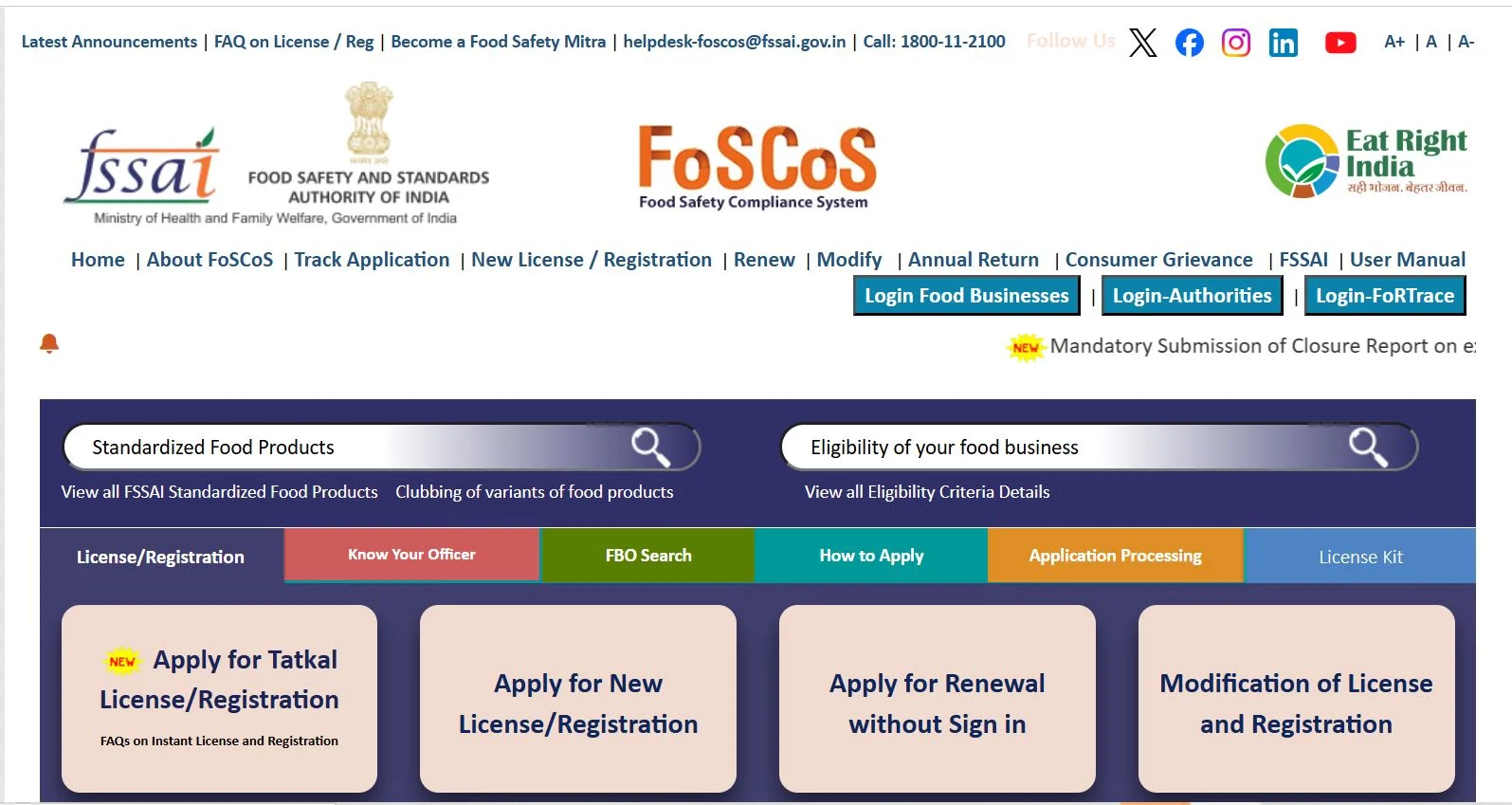
Step 1: Visit the FoSCoS Portal
Go to the official website: foscos.fssai.gov.in. Click on the yellow box labelled Apply for License/Registration.
Step 2: Select Your Application Type
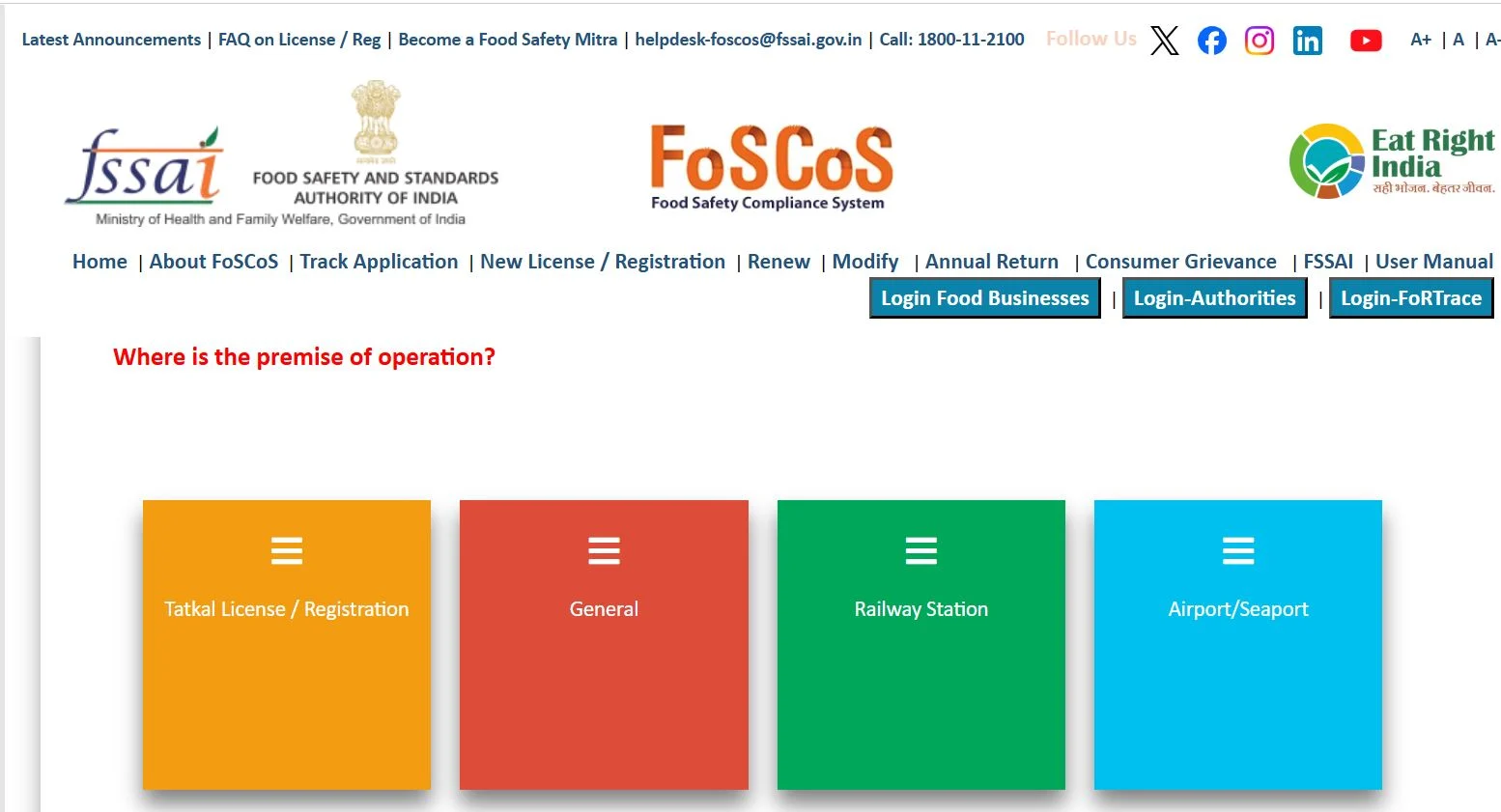
Choose whether you need a Registration Certificate (Form A) or a License (Form B) depending on your annual turnover and type of business:
- Basic Registration (Turnover ≤ ₹12 lakh)
- State License (₹12 lakh < Turnover ≤ ₹20 crore)
- Central License (Turnover > ₹20 crore or inter-state operations)
Step 3: Choose State and Kind of Business
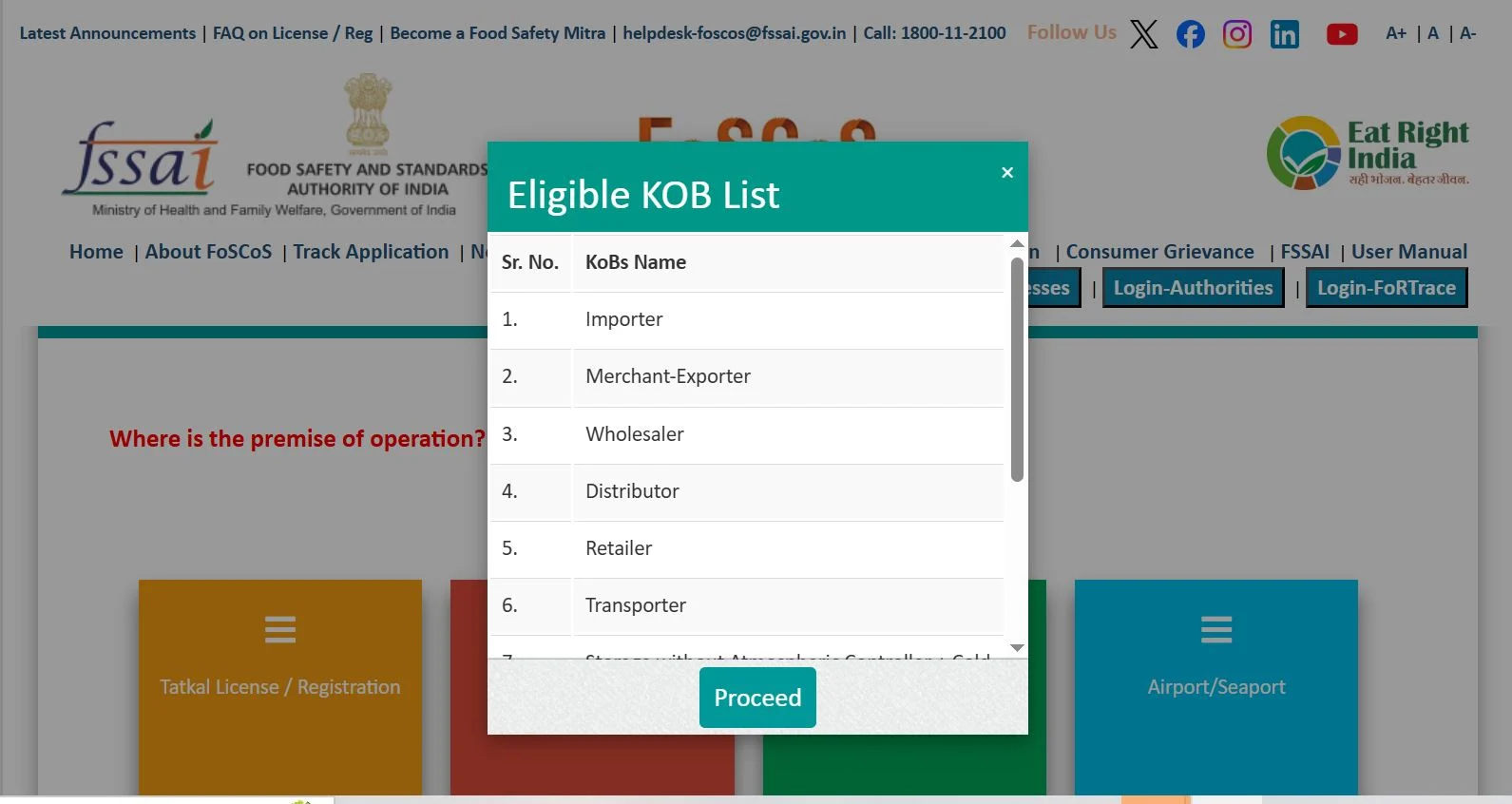
Select the State in which your business operates. Browse through the Kind of Business categories, read the definitions, and select the one that best matches your operations by clicking the appropriate radio button.
Step 4: Fill Out the Application Form
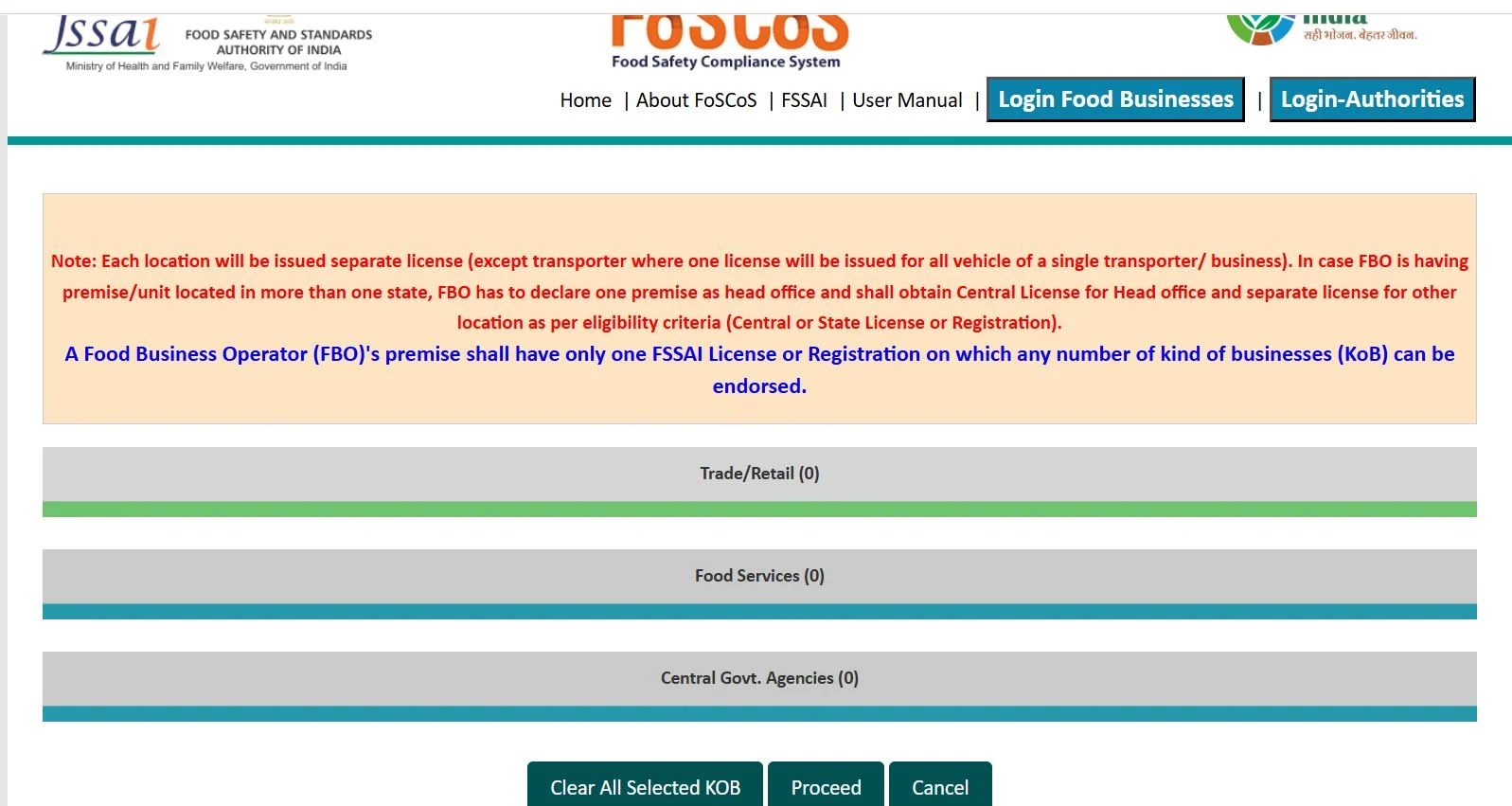
- For Basic Registration: Fill Form A
- For License (State/Central): Fill Form B
Enter all mandatory details such as business name, address, contact info, and food categories.
Step 5: Upload Required Documents
Upload supporting documents like:
- Identity and address proof
- Business registration certificate
- Food Safety Management System plan
- NOC from local authorities (if required)
- Other applicable documents
Step 6: Pay the Application Fee
Pay the applicable fee online using the available payment options. The amount depends on the type and scale of your food business.
Step 7: Receive Reference Number
Once payment is successful, a 17-digit reference number will be generated. Save this for future use.
Step 8: Track Application Status
Go to the FoSCoS homepage and click on “Track Application Status”. Enter your reference number to monitor progress.
Step 9: License Issuance
After review and, if needed, physical inspection by FSSAI authorities, your license will be issued. You can download your certificate from the FoSCoS portal once approved.
Click here to know more about the FSSAI Tracking: Track FSSAI Application Status
Documents Required for Food License
The following documents are generally required:
- Passport-sized photographs
- Identity proof (Aadhaar card, PAN card)
- Address proof (Electricity bill, rent agreement)
- Business registration proof (Shop Act, MSME certificate)
- Food Safety Management Plan
- List of food products to be handled
- Layout plan of the processing unit (if applicable)
- NOC from municipality or local body (if applicable)
- Water testing report (if applicable)
Note: Requirements may vary depending on the type of license and business model.
Food License Fees
The food license fees in India depend on several factors such as the type of license (Basic, State, or Central), the scale and nature of the business, its annual turnover, and the duration for which the license is applied. Other factors like the category of food products, manufacturing capacity, and whether the business operates in one state or across multiple states can also influence the fee structure.
Additional charges may apply for application processing and consultancy.
Food License Renewal
FSSAI licenses are valid for 1 to 5 years. Renewal must be applied for at least 30 days before the license expiry.
Steps for Renewal:
- Log in to the FoSCoS portal.
- Select the license renewal option.
- Update any changes in business information.
- Upload any new or updated documents.
- Pay the renewal fee.
- Submit application for review.
Failure to renew the license on time results in penalties and may require a new application.
How to Download a Food License Certificate
Once approved, the license can be downloaded from the FoSCoS portal:
- Log in with your credentials.
- Navigate to the "Issued License/Registration" section.
- Download the certificate in PDF format.
Checking Food License Status
To check the status of your FSSAI application:
- Visit the FoSCoS portal.
- Click on "Track Application Status.
- Enter your application reference number.
- View the current status of your application.
What Happens If You Do Not Apply for an FSSAI License?
- Delisting from Online Platforms: Your business can be removed from food-tech and e-commerce platforms like Swiggy, Zomato, and Amazon, which mandate a valid FSSAI license for listing.
- Legal Penalties: Under Section 31 of the Food Safety and Standards Act, 2006, operating without a license can result in:
- Imprisonment for up to 6 months
- A fine of up to ₹5 lakhs
- Loss of Credibility: Running an unlicensed food business damages customer trust and can hurt your brand reputation in the market.
- Business Disruption: Your operations may be stopped by food safety authorities until compliance is achieved.
- Mandatory Display Requirement: For packaged food, it is compulsory to display the 14-digit FSSAI registration or license number. Non-compliance can lead to penalties or product recalls.
Conclusion
Obtaining a food license is a crucial step in starting and operating any food-related business in India. It ensures food safety, builds consumer trust, and supports business growth. Whether you are a small vendor or a large-scale food manufacturer, compliance with FSSAI guidelines is essential for your business’s long-term success.
If you're planning to launch or regularise your food business, make FSSAI licensing your priority. It’s not just a legal requirement; it’s a stamp of credibility and quality assurance in the Indian food industry.
Ready to Get Your Food License?
Don't risk penalties or business disruptions—secure your FSSAI food license today with IndiaFilings, India’s trusted partner for government registrations. Whether you run a home kitchen, a food truck, or a multi-state restaurant chain, our experts will handle everything from application to approval.
Apply now with IndiaFilings to ensure full compliance, protect your brand, and grow your food business with confidence!
Frequently Asked Questions (FAQs) About Food License
1. What is a Food License in India?
A Food License, issued by FSSAI, is a legal authorisation required for any business involved in food production, handling, distribution, or sale to operate legally and ensure public health and safety.
2. Is it mandatory to get a food license for my food business?
Yes, every food business operator (FBO), regardless of size, must obtain a food license or registration under the Food Safety and Standards Act, 2006.
3. What are the types of food licenses issued by FSSAI?
FSSAI offers three types:
- Basic Registration (for small businesses)
- State License (for medium-sized businesses)
- Central License (for large-scale/interstate/export operations)
4. How do I know which type of license I need?
It depends on your annual turnover and business operations:
- Up to ₹12 lakhs: Basic Registration
- ₹12 lakhs to ₹20 crores: State License
- Above ₹20 crores or interstate/export: Central License
5. How can I apply for a food license in India?
You can apply online via the FoSCoS portal by registering, filling out the application, uploading required documents, and paying the applicable fee.
6. What documents are required for food license application?
Common documents include:
- Identity & address proof
- Business registration certificate
- Food safety management plan
- List of food products
- Premises layout (for manufacturers)
7. How long is the food license valid?
A food license is valid for 1 to 5 years, depending on the duration selected at the time of application.
8. What are the penalties for operating without a food license?
Penalties may include:
- Fines up to ₹5 lakh
- Imprisonment up to 6 months
- Closure of business
9. Is a food license required for home-based food businesses?
Yes, even home kitchens, tiffin services, and cloud kitchens must obtain at least a Basic FSSAI Registration.
10. Can a single food license cover multiple outlets or branches?
No. Each food business location requires a separate license or registration.
11. How early should I apply for license renewal?
You must apply at least 30 days before the license expiry to avoid penalties or disruption in operations.
12. Is there a difference between FSSAI registration and a license?
Yes:
- Registration is for small businesses (turnover ≤ ₹12 lakhs)
- The license is for medium and large businesses (turnover > ₹12 lakhs)
12. Can I transfer my food license to someone else?
Yes, it can be transferred, especially in cases like the death of the license holder, subject to the submission of required documents.
13. How do I download my food license certificate?
Log in to the FoSCoS portal → Go to “Issued License” → Download the certificate in PDF format.
14. Is physical inspection necessary for the food license?
It depends on the type of business. For manufacturing units or medium/large-scale businesses, physical inspection is often required before approval.