
IndiaFilings
Expert
Published on: Aug 28, 2026
Step by Step Guide on Trademark Registration Process
Trademark registration can be obtained for words, logo, numerals, slogan, device and more in India. Trademark registration provides legal right of exclusivity for use of the mark to the owner of the trademark.
Trademark registration is however a long process involving multiple steps. In this article we cover the trademark registration process in India.
Trademark Search
Before beginning the trademark registration process, the entrepreneur or a trademark professional must conduct a trademark search of the trademark database. A trademark search will provide information about identical or similar trademark that has already been filed with the trademark registry.
A trademark search can be conducted by visiting the Trademark Registrar Website. A guide on "How to do a trademark search" and "Interpreting Trademark Status" is available in the IndiaFilings Learning Center.
Trademark Filing
Once a trademark search is completed, the application for trademark registration can be filed with the Trademark Registrar. The application for registration of trademark must be made in the prescribed manner and filed along with the fee for trademark registration.
Trademark application can be filed at one of the five Trademark Registrar Office having jurisdiction over the State or online. Trademark applications can be filed online by IndiaFilings.com or a trademark agent or lawyer.
A trademark registration application must contain the following information:
- Logo or the Trademark
- Name and address of the trademark owner
- Classification or Trademark Class
- Trademark used since date
- Description of the goods or services
Trademark Application Allotment
Once the Trademark registration application is filed with the Trademark Registrar, a trademark application allotment number is provided within one or two working days.
The trademark application can also then be tracked online through the Online Trademark Search facility.
Typically, on obtaining trademark application allotment number, the owner of the trademark can affix the TM symbol next to the logo.
Vienna Codification
The Vienna Classification or Vienna Codification, established by the Vienna Agreement (1973), is an international classification of the figurative elements of marks.
Once the trademark registration application is filed, the Trademark Registrar will apply the Vienna Classification to the trademark based on the figurative elements of marks.
While this work is in progress, the trademark application status usually reflects as "Sent for Vienna Codification".
Trademark Examination
Once Vienna Codification is completed, the trademark registration application will be allotted to a Trademark Officer in the Trademark Registrar Office.
The Trademark Officer would then review the trademark application for correctness and issue a trademark examination report. The Trademark Officer has the ability to accept the trademark registration application and allow for trademark journal publication or object the trademark registration application.
If the trademark registration application is objected by the Trademark Officer, the trademark applicant has the right to appear before the Trademark Officer and address the objections.
If the Trademark Officer is satisfied with the justifications of the trademark applicant, the trademark would be allowed for trademark journal publication.
In case the Trademark Officer is not satisfied with the justifications, the trademark applicant has the right to appeal the decision of the Trademark Officer before the Intellectual Property Appellate Board.
Trademark Journal Publication
Once the trademark registration application is accepted by the Trademark Registrar, the proposed trademark is published in the Trademark Journal.
The trademark journal is published weekly and contains all the trademarks that have been accepted by the Trademark Registrar. Once the trademark is published in the trademark journal, the public have an opportunity to object the trademark registration, if they believe they will be damaged by that registration.
If there are no objections filed within 90 days of that publication, the mark will typically be registered within 12 weeks - months time.
If the trademark registration application is opposed by a third-party, hearing will be called for by the Trademark Hearing Officer.
Both the trademark applicant and the opposing party have the chance to appear at the hearing and provide justifications for registration or rejection of the trademark application.
Based on the hearings and the evidence presented, the Trademark Hearing Officer will determine if the trademark registration application should be accepted or rejected. The decision of the Trademark Hearing Officer can also be challenged by escalating to the Intellectual Property Appellate Board.
Trademark Registration
Once there are no objections or oppositions for the trademark registration application, the trademark manuscript and trademark registration certificate will be prepared and sent to the trademark application.
Once the trademark registration certificate is issued, the trademark is considered to be a registered trademark of the owner, granting the trademark owner exclusive use of the mark. The ® symbol can now be placed next to the logo or trademark.
For trademark registration in India, visit IndiaFilings.com
Trademark Registration Process Flowchart
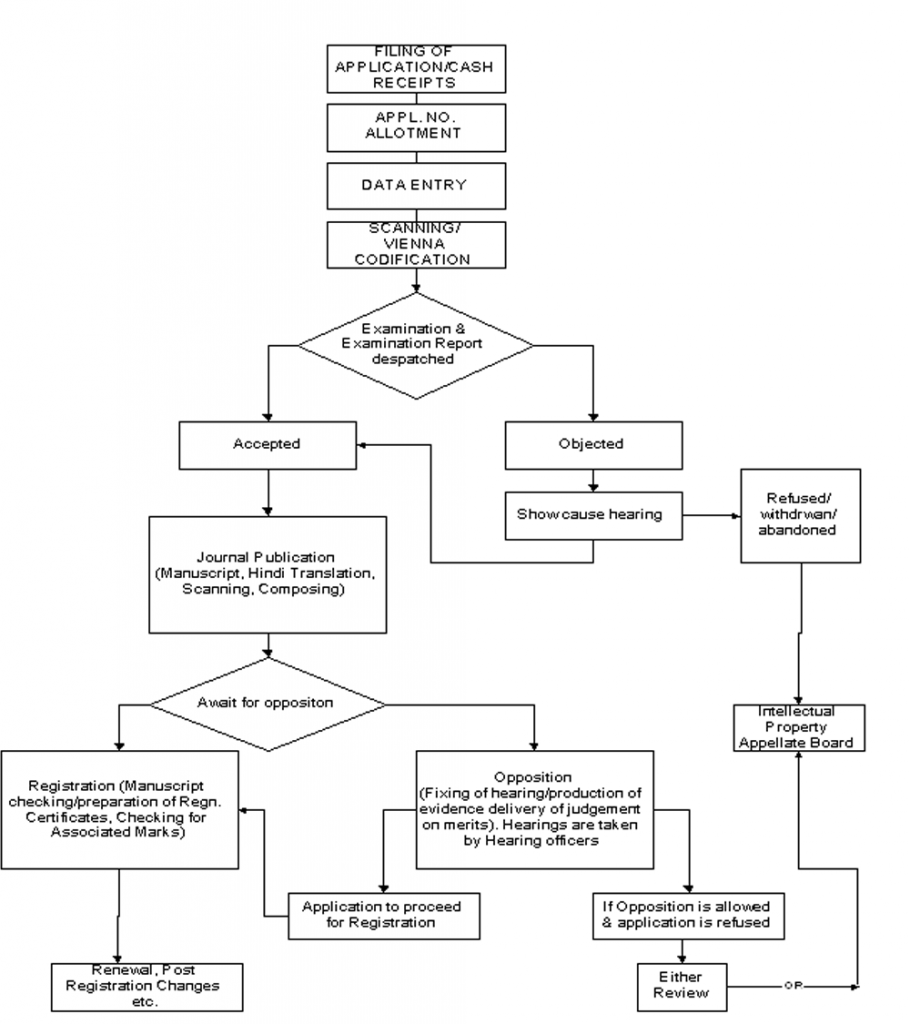 Trademark Registration Process Flowchart