

Renu Suresh
Expert
Published on: Aug 11, 2026
Can I File ITR by Myself?
You are also the one who asks, Can I File ITR by Myself? Yes, you can! The Income Tax Department has made the process user-friendly, allowing individuals with simple tax situations to file their returns online with ease. If your income consists of salary and interest earnings, you can handle the ITR filing yourself without much hassle. However, for more complex cases, such as multiple income sources, foreign assets, or capital gains, seeking professional assistance is highly recommended to ensure accuracy and compliance. In this article, we’ll help you determine whether you can file your ITR on your own.
Filing your Income Tax Return (ITR) yourself may seem easy, but even small mistakes can lead to penalties or missed refunds. Our expert tax professionals ensure 100% accuracy, claim all eligible deductions, and help you maximize your savings. Why take the risk? Let the experts handle it for you with confidence and peace of mind.
ITR Filing
Before diving into Can I File ITR by Myself?, let’s first understand what ITR filing is.
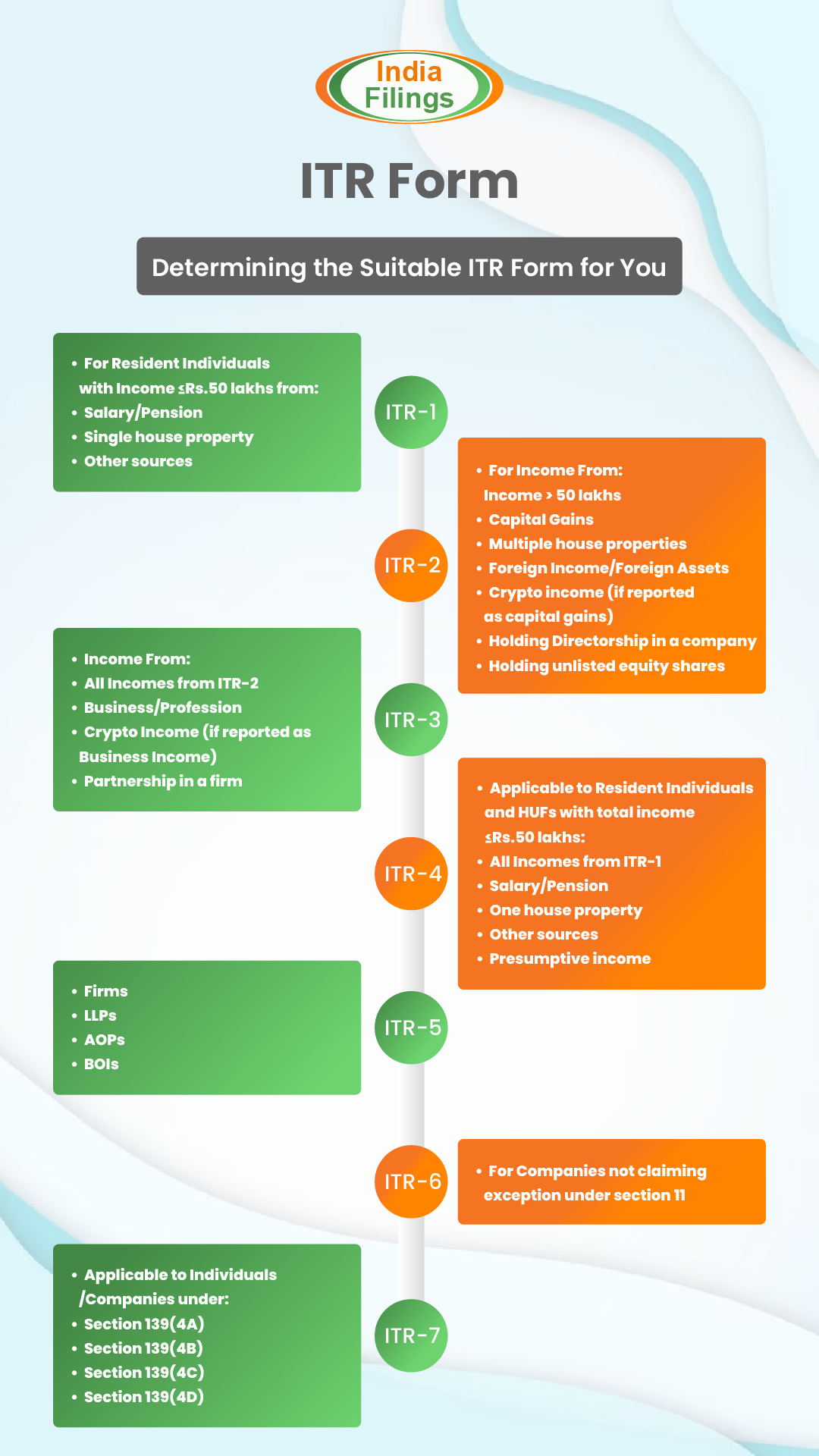
ITR Filing is the process of reporting your income, expenses, and taxes paid to the Income Tax Department. The government provides different ITR forms, and selecting the correct one depends on your income sources, financial activities, and eligibility criteria. Filing your ITR accurately ensures compliance with tax laws and helps you claim refunds or avail tax benefits where applicable. Types of ITR Forms & Who Can Use Them:
Who Can File ITR Themselves?
Filing your Income Tax Return (ITR) by yourself is possible if your financial situation is straightforward. Here’s who can confidently file their ITR without professional help:
1. Salaried Individuals with No Complex Investments
- If your income is mainly from salary and interest income, you can easily file using ITR-1 (Sahaj).
- If you have a single house property, you can still use ITR-1.
- Your tax deductions (like 80C, 80D, HRA, or home loan interest) are easy to claim.
2. Individuals with Income from Interest, Dividends, or pensions
- If your income comes from fixed deposits (FDs), savings accounts, recurring deposits (RDs), or dividends, you can file without a CA.
- Senior citizens with pension income can also file independently.
3. Individuals Without Business or Freelance Income
- If you don’t run a business or work as a freelancer, your tax filing is simpler.
- Business or freelance income requires using ITR-3 or ITR-4, which can be complex.
4. Individuals Comfortable with Tax Portals & Form 26AS
If you can log in to the Income Tax e-Filing portal, update details, and check Form 26AS for TDS (Tax Deducted at Source), you can handle filing independently.
5. Individuals Without Capital Gains or Foreign Income
- If you haven’t sold stocks, property, or cryptocurrency, you avoid capital gains tax, making filing easier.
- No foreign income, foreign bank accounts, or overseas investments means fewer complications.
However, even a small mistake in tax filing can be costly. Errors can lead to tax notices, penalties, or missed tax-saving opportunities.
Why take the risk? Our tax experts ensure accurate filing while maximising your deductions!
Pros of Filing Your ITR Yourself
- Simple Income Structure – If you are a salaried individual with only salary, interest, or dividend income and no business or capital gains, self-filing can be straightforward.
- Cost Savings – You save money by not hiring a CA or tax professional.
- Learning Experience – Filing yourself helps you understand tax laws, deductions, and exemptions, making you financially aware.
- Privacy & Control – You don’t need to share financial data with third parties.
Cons of Filing Your ITR Yourself
- Complex Tax Situations – If you have multiple income sources, foreign income, capital gains, or business income, mistakes in filing could lead to tax scrutiny.
- Lack of Time & Expertise – Understanding deductions, tax credits, and Form 26AS can be time-consuming. A small mistake could result in notices or penalties.
- Missing Tax-Saving Opportunities – Tax professionals can help you maximise deductions and plan taxes better than a DIY approach.
- Risk of Errors & Notices – Filing errors can lead to defective returns, scrutiny, or penalties from the Income Tax Department.
Why take a chance? Our tax professionals ensure error-free and stress-free filing, so you get maximum tax benefits.
Also read Can I File a Revised Return After ITR Processed?
When Do You Need a Tax Expert?
If your tax situation is complex, attempting to file on your own could lead to errors, penalties, or tax notices. Here are the cases where you should consider hiring a tax professional:
Individuals with Business or Freelance Income
- If you run a business, work as a freelancer, or have self-employed income, your tax filing is more complex.
- You need to file ITR-3 or ITR-4, which includes profit & loss statements, GST filings, and tax audits in some cases.
Example: A graphic designer earning through multiple clients must report professional income under presumptive taxation or actual accounting.
Individuals with Capital Gains from Stocks, Crypto, or Real Estate
- If you sold shares, mutual funds, cryptocurrency, or property, you must report capital gains.
- You need to calculate short-term and long-term capital gains tax, apply indexation benefits, and file ITR-2 or ITR-3.
Example: If you sold a house or stocks this year, you might owe capital gains tax and should consult a CA to avoid mistakes.
NRIs or Individuals with Foreign Income & Assets
- If you earn abroad or have foreign assets (bank accounts, shares, property), tax rules become complex.
- NRIs (Non-Resident Indians) need to file ITR-2 or ITR-3, considering Double Taxation Avoidance Agreements (DTAA).
Example: An NRI earning in the UAE but owning property in India must declare rental income under Indian tax laws.
High-Income Earners (Above ₹50 Lakh)
- If your total income exceeds ₹50 lakh, you must report additional details in Schedule AL (Assets & Liabilities).
- You need ITR-2 or ITR-3, which requires expert handling to avoid tax scrutiny.
Example: A salaried person with ₹55 lakh annual income and multiple investments needs professional help for accurate tax filing.
Individuals Who Have Received Tax Notices
- If you’ve received a scrutiny notice, defective return notice, or tax demand, professional guidance is crucial.
- A CA will respond to tax authorities, correct errors, and prevent future penalties.
Example: If your Form 26AS has mismatches with your ITR filing, you may get a notice requiring expert handling.
Individuals Who Want Tax Planning & Deductions
- A CA helps maximise your tax deductions (80C, 80D, 80G, HRA, LTA, etc.) and minimise tax liability.
Example: A person with multiple home loans, investments, and insurance policies can benefit from professional tax-saving strategies.
Seeking Professional Assistance: When Is It Necessary?
While self-filing ITR is a viable option for many individuals, there are certain situations where seeking professional assistance may be advisable:
- Complex Tax Scenarios: As mentioned above, If you have multiple income sources, own a business, or have intricate tax implications, consulting a tax professional can help ensure compliance and maximise deductions.
- First-time Filers: If you're filing your ITR for the first time, seeking guidance from an expert can help you understand the process better and avoid potential mistakes.
- Lack of Confidence: If you're unsure about your ability to handle the tax-filing process accurately, it's wise to seek professional help to avoid potential penalties or complications.
Can I file ITR for the Last 3 Years now?
Final Thoughts
Filing your own ITR is a great way to take control of your finances if you have a simple tax situation. However, for complex cases, professional assistance ensures accuracy and compliance. If you are confident in your understanding of tax rules, go ahead and file your ITR yourself. If not, consider reaching out to an IndiaFilings expert for guidance.
IndiaFilings can help you file your tax returns accurately and hassle-free. Our expert ensures compliance, accuracy, and proper tax planning so that your return is processed smoothly.
Gest started today for stress-free ITR filing!
Frequently asked questions (FAQs)
1. Can I file my ITR myself?
Yes, if your income structure is simple (salary, interest income, or pension), you can file your ITR yourself using the Income Tax Department’s online portal. However, if you have multiple income sources, business income, capital gains, or foreign assets, expert assistance is recommended to avoid errors.
2. What happens if I make a mistake while filing my ITR?
Small mistakes in ITR filing can lead to tax notices, penalties, or rejection of refund claims. If you realise an error after filing, you can revise your return before the due date. However, professional help ensures accuracy from the start.
3. Which ITR form should I use?
The ITR form you need depends on your income sources:
The correct ITR form depends on your income type:
ITR Form | Who Should Use It? |
ITR-1 (Sahaj) | Salaried individuals, pensioners, and those with interest income (for residents only) |
ITR-2 | Individuals & HUFs with capital gains, multiple properties, foreign income, or high income (above ₹50 lakh) |
ITR-3 | Business owners, professionals, and freelancers (without presumptive taxation) |
ITR-4 (Sugam) | Small businesses & professionals under presumptive taxation (Section 44AD, 44ADA, 44AE) |
ITR-5 | Partnership firms, LLPs, associations, and trusts (except companies) |
ITR-6 | Companies other than those claiming exemption under Section 11 (charitable purposes) |
ITR-7 | Trusts, NGOs, political parties, and entities filing under Sections 139(4A) to 139(4D) |
4. Do I need a CA to file my ITR?
Not necessarily. If your financial situation is straightforward, you can file on your own. However, if you have business income, capital gains, foreign income, or high-value transactions, a CA can help optimize tax savings and ensure compliance.
5. What are the benefits of filing ITR on time?
Filing your ITR before the due date helps you:
- Avoid late fees and penalties
- Carry forward losses for future tax benefits
- Improve your credit score for loans
- Claim refunds for excess tax paid
6. What should I do if I receive a tax notice?
Receiving a tax notice can be stressful, but it’s often due to discrepancies in your filing. You can respond online or seek professional assistance to handle it properly and avoid further complications.
7. How can IndiaFilings help with ITR filing?
IndiaFilings provides expert assistance to file your ITR accurately, ensuring you claim maximum deductions while staying tax-compliant. Our professionals handle all complexities, so you can file stress-free and error-free.