

RENU SURESH
Expert
Published on: Jul 30, 2026
How to Generate Business Ideas (9 Proven Methods)
Every successful startup begins with a strong and compelling business idea. If you’re wondering how to Generate Business Ideas for your own venture, you’re not alone—many aspiring entrepreneurs face the same challenge. Coming up with a winning idea is one of the most important and demanding steps in building a successful company. Generating great business ideas requires a combination of creativity, keen observation, and strategic thinking. By identifying customer needs, spotting gaps in the market, and looking beyond conventional solutions, you can uncover opportunities with real potential. This guide provides practical tips and proven techniques to help you develop startup ideas that stand out and have the potential to succeed.
Learn What a Business Idea Really Means
1. Generate Business Ideas by Thinking Beyond Limits
When exploring how to Generate Business Ideas, avoid the common mistake of thinking too small. Many first-time entrepreneurs focus on making minor improvements to existing products or services. While small tweaks can work, they rarely lead to a breakthrough business.
To build a startup that stands out, you need to think on a larger scale—create something transformative that can change how people live or work. This might require deep brainstorming and creative problem-solving, but the payoff can be huge. The most successful startups solve real problems or address unmet needs. So, don’t limit yourself—embrace bold, innovative thinking and let your imagination guide you to game-changing ideas.
2. Solve a Problem You Personally Experience
One of the most effective approaches when exploring how to Generate Business Ideas is to start with a problem you’ve faced yourself. When you personally experience an issue, you understand the pain points deeply and are naturally more motivated to find a solution. This firsthand insight can spark practical, innovative ideas that others might overlook.
A common mistake many entrepreneurs make is assuming they already know what customers want without actually asking them. The best business ideas, however, solve real problems or meet specific needs of a target market. Instead of guessing, talk to potential customers about their challenges and frustrations. Their feedback will reveal valuable opportunities for innovation and improvement, helping you create a business idea that truly matters.
3. Pay Attention to Your Surroundings and Everyday Problems
When learning how to Generate Business Ideas, one of the simplest yet most effective strategies is to observe the world around you. Every day challenges and frustrations often hold the key to innovative solutions.
For instance, you might notice a lack of quality coffee shops near your office—an opportunity for a new business. Or while grocery shopping, you could get frustrated by unclear packaging that makes it hard to choose products. These small inconveniences can inspire ideas for better services, smarter packaging, or entirely new products.
Ask yourself questions like:
- What common problems do people face in their daily lives?
- How could these problems be solved?
- What steps would it take to create a solution?
By exploring these questions, you’ll uncover more opportunities and develop creative, actionable ideas for your startup.
4. Steal Good Ideas (But Make Them Your Own)
When learning how to Generate Business Ideas, remember: you don’t always have to reinvent the wheel. Sometimes, adapting existing concepts can be more effective than creating something entirely new. As Steve Jobs famously said, “Picasso had a saying — ‘good artists copy; great artists steal,’ and we have always been shameless about stealing great ideas.”
Starting from scratch doesn’t mean you must create a completely original business model. Many proven ideas already exist—your task is to adapt and improve them for your market. Borrowing concepts from other startups or established companies is perfectly fine, as long as you add your unique twist rather than simply copying.
Some of the world’s most successful companies have thrived this way. Instagram, for example, adopted the Stories feature from Snapchat, and within months, Instagram Stories surpassed Snapchat’s daily active users. Apple famously drew inspiration from Xerox for the graphical user interface and mouse, proving that smart adaptation can lead to revolutionary success.
By studying and reimagining existing ideas, you can uncover opportunities to create something both familiar and fresh—an essential skill when figuring out how to Generate Business Ideas that work.
5. Combine Seemingly Unrelated Ideas to Create Something New
A powerful approach when learning how to Generate Business Ideas is to combine two or more seemingly unrelated concepts into a fresh, innovative solution. For example, if you’ve ever wanted to start a business but weren’t sure where to begin, teaming up with someone who shares your vision could spark the breakthrough you need.
Before brainstorming, ensure all parties are aligned and willing to compromise. Successful collaboration requires blending different perspectives into a cohesive idea—without compromise, even great concepts can fail.
Here’s a simple exercise to try:
- Pick two random industries and explore how they might intersect.
- Example: Car rental + software → Turo, the peer-to-peer car-sharing platform.
Even revolutionary products like the iPhone began as combinations of existing tools—a phone, a camera, and a calculator—brought together into one seamless device.
Equally important is considering the needs of your target market. What are they struggling with that isn’t addressed elsewhere? How can their experience be improved or made more convenient? For instance, long airport security lines could inspire a tech solution to streamline the process.
The key is asking the right questions: “What would make my life easier?” By identifying these needs and creatively combining ideas, you can uncover unique opportunities that lead to successful startup concepts.
6.Think About What You’re Passionate About
When exploring how to Generate Business Ideas, it’s essential to focus on what genuinely excites you. Passion for your startup idea will keep you motivated during challenges and drive you to work relentlessly toward your goals.
If you’re not enthusiastic about your concept, it will be difficult to convince others—employees, partners, or investors—to believe in it. Spend time brainstorming ideas that truly energise you. The more passion you bring to your startup, the greater your chances of success.
Ask yourself:
- What problem am I trying to solve?
- What need does my product or service fulfil?
A great startup idea is usually simple, yet it addresses a real problem that people care about. Solving an actual need ensures your offering will be wanted and needed, leading to a loyal customer base. Without demand, even the most brilliant idea is unlikely to succeed. By aligning your passion with a real problem, you create a startup that’s both meaningful and marketable.
7.Use Technology to Solve Problems
When learning how to Generate Business Ideas, one of the most important strategies is to think about the future. What will people need in the years ahead? Which emerging trends could create opportunities for innovation? Focusing only on today’s trends can be risky—they may be outdated by the time your startup launches.
The major emerging industries of the 2020s include Metaverse & Blockchain, Artificial Intelligence, Energy, Transportation, and Climate Change. Aligning your startup with a booming sector increases your chances of long-term success.
Look for ways to improve existing solutions or offer entirely new ones. For instance, if a problem is currently solved using expensive manpower or inefficient processes, consider how technology could provide a more efficient, cost-effective solution. By leveraging innovation, you can meet unmet needs and create a startup that stands the test of time.
8.Be Ready to Pivot and Adapt
When learning how to Generate Business Ideas, it’s important to remember that your initial concept might not be your final one. Very rarely does a first idea turn into a trillion-dollar success overnight. The journey of a startup is full of ups and downs, and the best entrepreneurs are those who can adapt quickly to changes in the market.
Flexibility is key. If your original idea isn’t working as expected, don’t be afraid to pivot—adjust your approach or explore a new direction. One effective method is to let a friend or colleague interview you about your concept and ask tough, probing questions. This exercise tests your idea against reality and helps uncover areas for improvement, such as the business model or revenue strategy.
Feedback from others is invaluable. Talk to friends, family, or potential customers and gauge their reactions. Are they excited about your solution? Do they see it as addressing a real problem? The more people who validate and support your idea, the stronger your chances of building a successful startup.
Being open to change, learning from feedback, and refining your approach are essential steps in generating business ideas that are both viable and impactful.
9.Research and Test Your Business Idea
When learning how to Generate Business Ideas, it’s crucial to validate your concept before investing significant time or money. Talk to people who can provide insights through research, feedback, or thoughtful questioning, and gauge their reactions before moving forward.
You can also approach potential customers directly to see if they would be willing to pay for your product or service. This step is especially important for digital products or apps, where users can’t physically interact with the product until it’s fully developed.
If you struggle to find interest in your idea, it may indicate a gap that needs addressing—or that the concept may not be viable. Testing the waters early prevents wasted effort and ensures your startup addresses a real need.
Before building your solution, conduct thorough research. Ask yourself:
- Is there a market for my product or service?
- Who are my competitors, and what are they doing well—or poorly?
By understanding the bigger picture and validating demand, you increase your chances of turning your idea into a successful and sustainable business.
Validating Your Business Idea
Once you’ve discovered a promising concept that aligns with your skills and addresses a real gap or problem, the next crucial step in generating business ideas is validation.
Validation is the process of testing your idea against real-world conditions and market realities. It ensures that your concept has genuine potential before you invest significant time, money, and effort. Here are effective ways to validate your business idea:
1. Conduct a SWOT Analysis
A SWOT analysis examines the Strengths, Weaknesses, Opportunities, and Threats of your idea. This framework helps you identify your competitive advantages, areas for improvement, unique opportunities to pursue, and potential risks from competitors or market conditions. Conducting a SWOT analysis is vital for refining your idea and preparing for challenges ahead.
2. Engage with Potential Customers
Your target audience is one of the most valuable resources for validation. Create a basic prototype or model of your product or service and gather feedback. Ask:
- Is this solution useful?
- How could it be improved?
- How much would you be willing to pay?
This feedback can help you refine your offering, adjust your pricing, or even pivot your business model if necessary.
3. Launch a Minimum Viable Product (MVP)
An MVP is a simplified version of your product with only the core features needed to solve a specific problem. Test your MVP with a small group of customers and observe how they interact with it. Assess whether it delivers value and meets their needs. This approach provides actionable insights before you scale your business.
4. Perform a Financial Feasibility Analysis
Assessing the financial viability of your idea is essential. Calculate your initial investment, operational costs, potential revenue, and break-even point. Compare these numbers with your customer feedback on pricing to ensure your business can generate a sustainable return.
5. Seek Feedback from Industry Experts
Experienced entrepreneurs and industry specialists can provide valuable insights, highlight potential pitfalls, and help fine-tune your idea. Their guidance can transform a good idea into a great one.
Validating your business idea requires research, reflection, and strategic testing. While challenging, this process increases your chances of success and builds confidence as you embark on your entrepreneurial journey.
Start small, test thoroughly, and refine continuously—this is the key to turning your idea into a business that truly makes an impact.
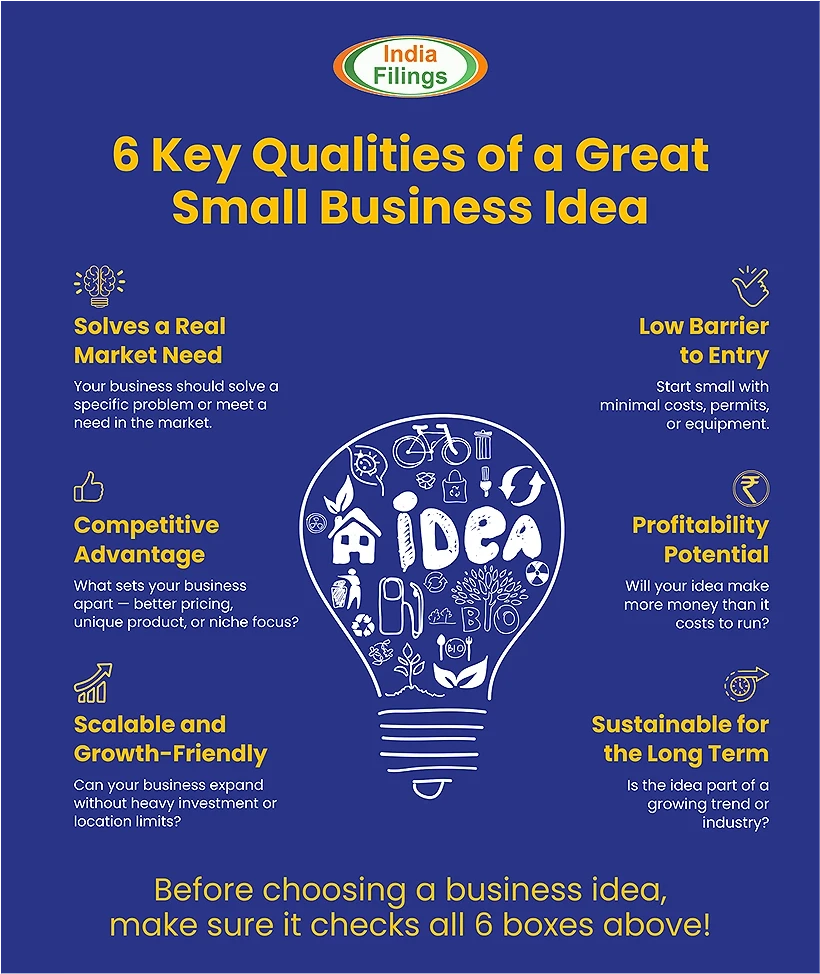
Key qualities of a Strong Business Idea
Strong business ideas share certain key qualities. They solve real problems, address customer needs, and have the potential to stand out in the market. Here’s a quick look at what makes an idea truly great.
Example: Byju’s – Turning Passion for Learning into a Billion-Dollar EdTech Startup
Background: Byju’s, founded by Byju Raveendran in India in 2011, started as a small coaching class to help students prepare for competitive exams. Byju experienced firsthand the challenges students face in understanding complex concepts, which inspired him to create a better learning experience.
How it Illustrates the Methods:
- Solve a Problem You Personally Experience: Byju knew the pain points of students struggling with traditional teaching methods, which motivated him to create engaging, interactive lessons.
- Pay Attention to Your Surroundings and Everyday Problems: He observed the lack of personalized learning tools and the inefficiency of classroom learning for large groups of students.
- Use Technology to Solve Problems: Byju’s leveraged technology to create an app-based learning platform with interactive videos, gamified lessons, and real-time feedback.
- Think About What You’re Passionate About: Byju’s passion for teaching and improving education was the driving force behind scaling his idea into a global EdTech platform.
- Validate Your Business Idea: Before scaling, Byju tested his learning methods with small groups of students, collected feedback, and refined his content for maximum impact.
Impact: Today, Byju’s is one of the world’s leading EdTech companies, serving millions of students globally and attracting investment from major global investors. The success of Byju’s shows how identifying a real problem, combining passion with technology, and validating your solution can turn a simple idea into a thriving business.
Ready to turn your business idea into reality? IndiaFilings makes it simple to register your startup, handle compliance, and get expert guidance every step of the way. Take the first step toward building your dream business today—start with IndiaFilings now and bring your idea to life!