
RENU SURESH
Published on: Aug 21, 2026
GST State Code List & Jurisdiction (2025)
Every GSTIN in India starts with a pair of digits that carry a specific meaning—they’re not just random numbers. These first two digits indicate the GST State Code, which shows the state or union territory where the business is registered.
For entrepreneurs, tax advisors, and accountants, being familiar with these state codes is key to ensuring smooth GST registration, accurate invoicing, and correct return filing.So, if you’ve ever been curious about what the 24 or 08 GST State Code stands for, this guide will help you understand their significance and how the system works.
In this article, we give a GST State Code list, its uses, and how to find the GST Jurisdiction, both state and central.
Click here to know more about the GST registration Number
What is the GST State Code?
A GST state code is a unique numerical code assigned to each state and union territory in India for GST registration and compliance. These codes help identify the specific state or union territory where a taxpayer is registered under GST.
.webp)
GST State Codes List in India
Use the following GST State Code List in India to find the relevant state code for any state/Union Territory/ Central Jurisdiction:
GST STATE CODE | STATE NAME |
1 | JAMMU AND KASHMIR |
2 | HIMACHAL PRADESH |
3 | PUNJAB |
4 | CHANDIGARH |
5 | UTTARAKHAND |
6 | HARYANA |
7 | DELHI |
8 | RAJASTHAN |
9 | UTTAR PRADESH |
10 | BIHAR |
11 | SIKKIM |
12 | ARUNACHAL PRADESH |
13 | NAGALAND |
14 | MANIPUR |
15 | MIZORAM |
16 | TRIPURA |
17 | MEGHALAYA |
18 | ASSAM |
19 | WEST BENGAL |
20 | JHARKHAND |
21 | ODISHA |
22 | CHATTISGARH |
23 | MADHYA PRADESH |
24 | GUJARAT |
26 | DADRA AND NAGAR HAVELI AND DAMAN AND DIU |
27 | MAHARASHTRA |
28 | ANDHRA PRADESH(BEFORE DIVISION) |
29 | KARNATAKA |
30 | GOA |
31 | LAKSHADWEEP |
32 | KERALA |
33 | TAMIL NADU |
34 | PUDUCHERRY |
35 | ANDAMAN AND NICOBAR ISLANDS |
36 | TELANGANA |
37 | ANDHRA PRADESH |
38 | LADAKH (NEWLY ADDED) |
97 | OTHER TERRITORY |
99 | CENTRE JURISDICTION |
Download the “GST State Code List PDF” for your future reference!
Examples of GST State Codes in India
When a business in Maharashtra registers for GST, its GSTIN starts with the state code 27. Similarly, a company in Karnataka will have a GSTIN beginning with 29, while a Bihar-based business’s GSTIN starts with 10. These codes indicate the state of registration and are used in invoices and GST returns to ensure proper tax compliance.
How to Identify the State Name from a GST Number
Every GST-registered taxpayer is assigned a unique 15-digit GST Identification Number (GSTIN). The structure of a GSTIN is as follows:
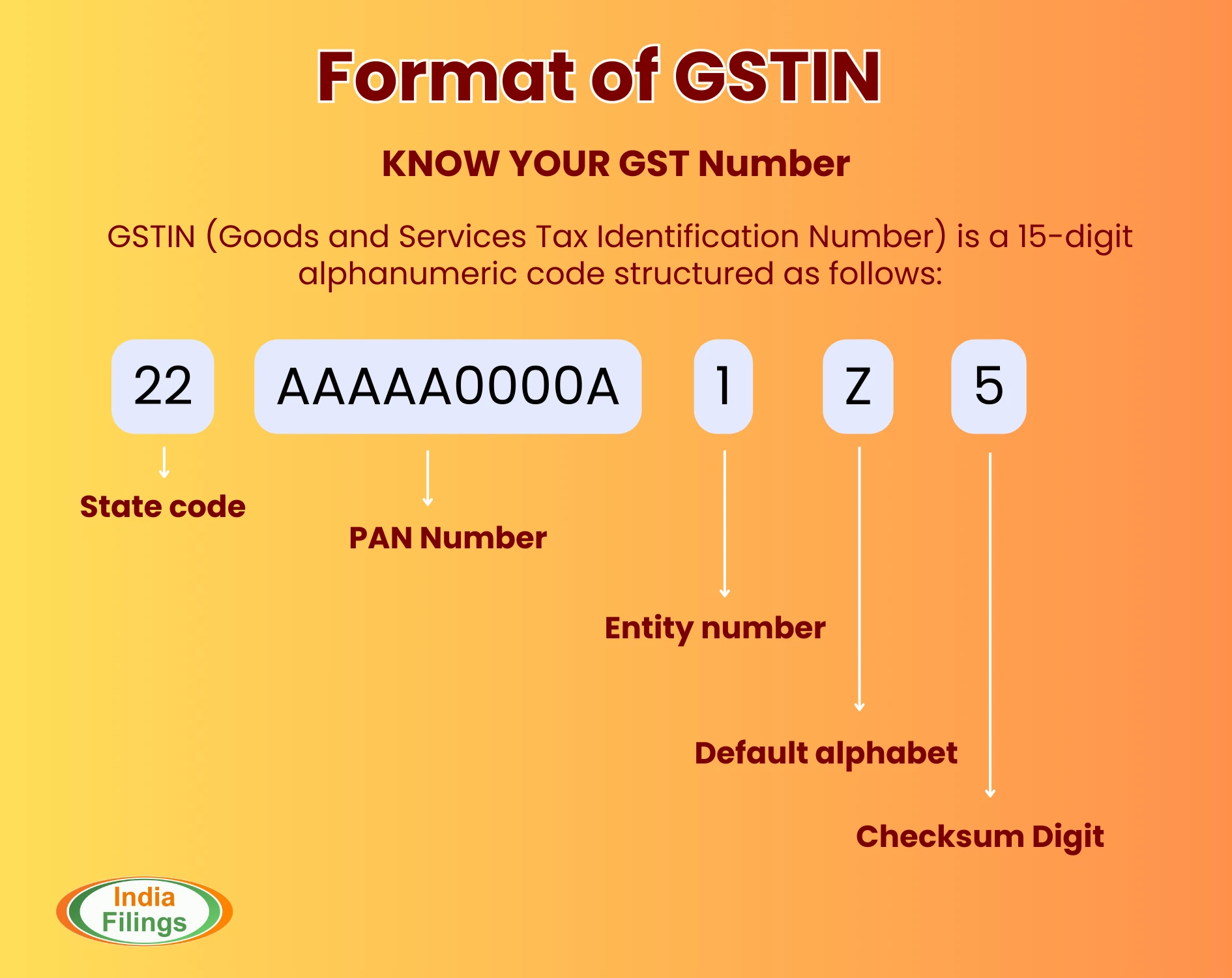
- First two digits – GST State Code, indicating the state or union territory of registration
- Next ten digits – Taxpayer’s PAN number
- Thirteenth digit – Number of registrations the entity has under the same PAN in that state
- Fourteenth digit – Always ‘Z’
- Fifteenth digit – Check code
The GST State Code helps identify the state of registration. For example, a GSTIN starting with 07 indicates Delhi, 27 represents Maharashtra, and 33 corresponds to Tamil Nadu. You can determine the state by referring to the GST State Code list.
Purpose of GST State Codes
The GST state code and its corresponding list are essential for determining the correct tax—IGST, SGST, or CGST—applicable to a transaction. A buyer’s state code is reflected in their GSTIN and is indicated in the “Place of Supply” section on the GST invoice.
If the buyer and supplier are registered in different states, IGST is applied; if they are in the same state, SGST and CGST are charged. For accurate tax compliance, businesses rely on the GST state code list during GST registration and while entering invoice details in GST returns.
Uses of GST State Codes
- GST Registration: The state code forms part of the GSTIN, which is required for all GST-related documentation and procedures.
- Invoicing:
- Determines whether IGST, SGST, or CGST applies.
- If the supplier and recipient are in the same state, CGST and SGST are charged.
- If the supplier and the recipient are in different states, IGST is applied.
- GST Return Filing:
- Helps tax authorities identify the state where the GST return needs to be filed.
Essential for businesses operating in multiple states, as each state requires a separate GSTIN.
What is a GST Jurisdiction?
A GST jurisdiction defines the geographical area where a business falls under the oversight of either state or central tax authorities. Taxpayers with a turnover below ₹1.5 crore are mostly under state jurisdiction, while those exceeding this limit are divided equally between state and central authorities.
Jurisdictions are typically organised by PIN codes, ensuring efficient tax administration, compliance, audits, and dispute resolution. Understanding GST jurisdiction is essential, as it determines filing requirements, regulatory obligations, and enforcement mechanisms, ensuring seamless GST implementation across India.
What are the Classifications of GST Jurisdiction?
GST jurisdiction is classified into Central and State jurisdictions based on tax administration authority.
- State jurisdiction: State jurisdiction covers taxpayers assessed by the State administration.
- Central jurisdiction: Central jurisdiction includes taxpayers under the direct oversight of the Central Government.
The allocation of taxpayers between these jurisdictions is done through a computerised system at the state level using stratified random sampling. This ensures a balanced distribution based on geographical location and type of registration.
GST jurisdictions are further structured into four hierarchical levels: Zone, Commissionerates, Division offices, and Range offices.
How to Search and Identify Your GST Jurisdiction?
Identifying the correct GST jurisdiction is essential for compliance and smooth tax administration. Taxpayers must provide accurate business location details during GST registration, which determines their jurisdiction. Below, we have given the steps to find the respective GST jurisdiction for both state and central,
To Search GST State Jurisdiction
Before applying for GST registration, taxpayers must determine their State jurisdiction. This can be done by referring to the State commercial tax, VAT, or Sales Tax department website. Each State provides a structured list of wards, circles, divisions, districts, and taluks, which helps identify the applicable jurisdiction.
Steps to Find GST State Jurisdiction:
- Visit the respective State Tax Department website.
- Search for the jurisdiction section using terms like {State}GST jurisdiction” and the State name.
- Locate the division, ward, or circle applicable to your business based on its address.
- Note down the jurisdiction details for reference in GST registration and compliance.
To Search GST Central Jurisdiction
In addition to State jurisdiction, businesses must identify their Central jurisdiction and range. The CBIC portal provides a Know Your Jurisdiction tool that helps taxpayers find their relevant zone, commissionerate, division, and range.
Steps to Find GST Central Jurisdiction:
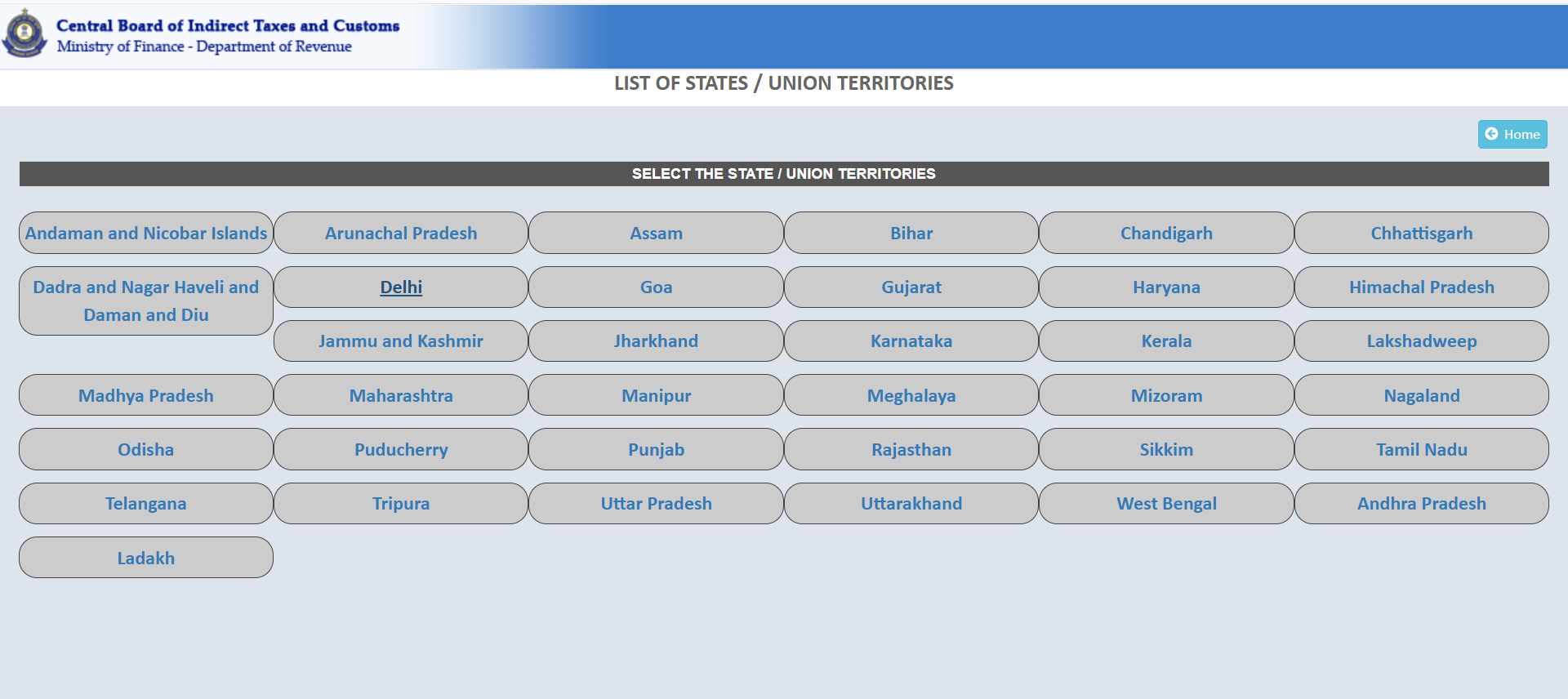
Step 1: Open the Know Your Jurisdiction tool on the CBIC portal and select your State/Union Territory from the provided list.
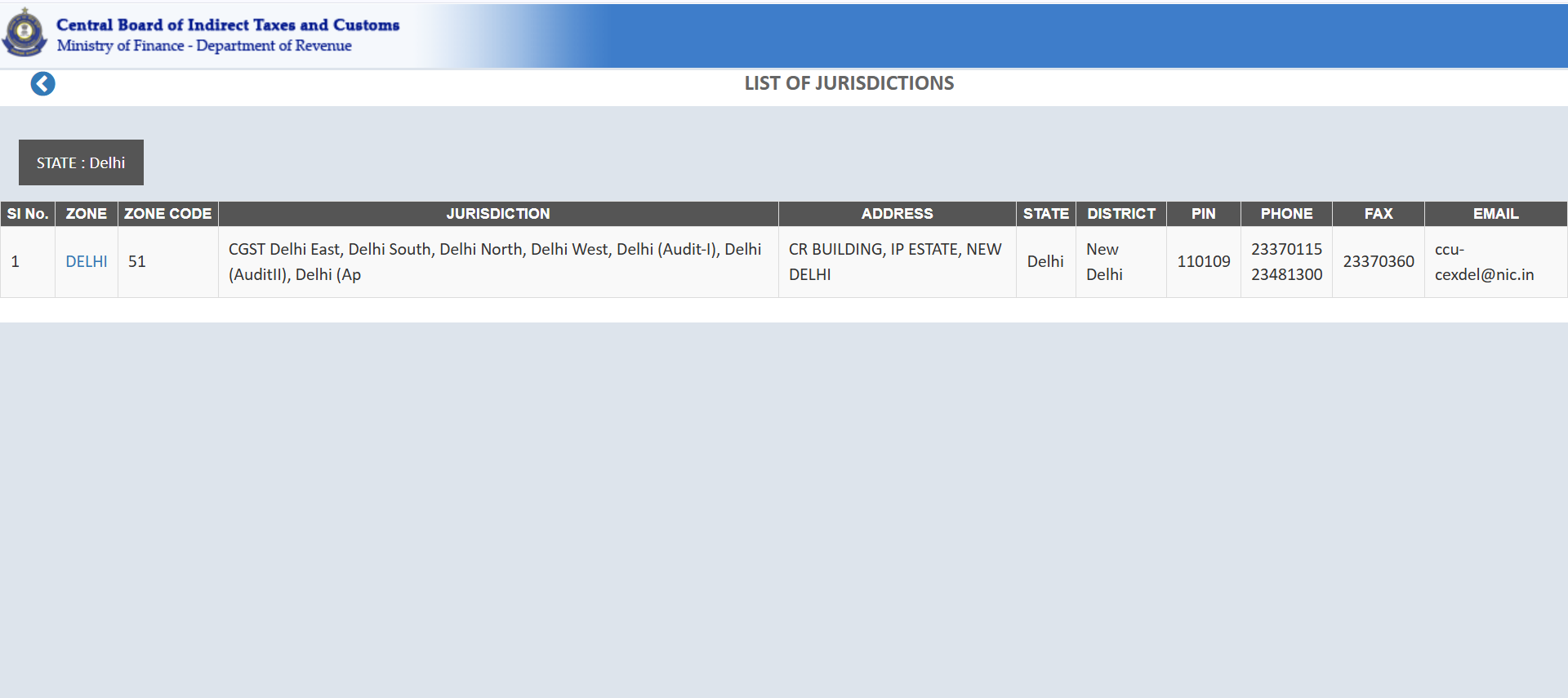
Step 2: Choose the applicable zone to view its associated commissionerates.
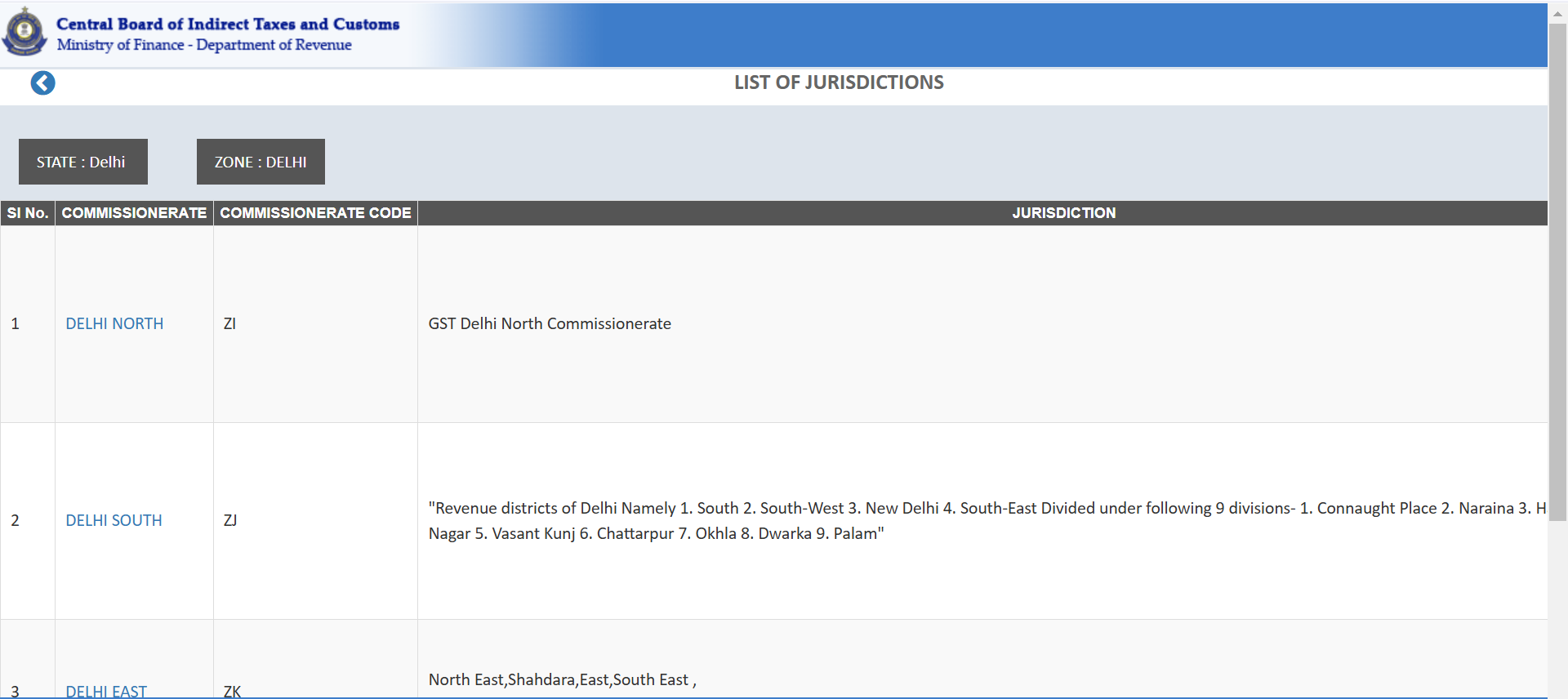
Step 3: Click on the relevant commissionerate to see the available sub-commissionerates/divisions.
Step 4: Select the applicable division, which will display the jurisdiction ranges.
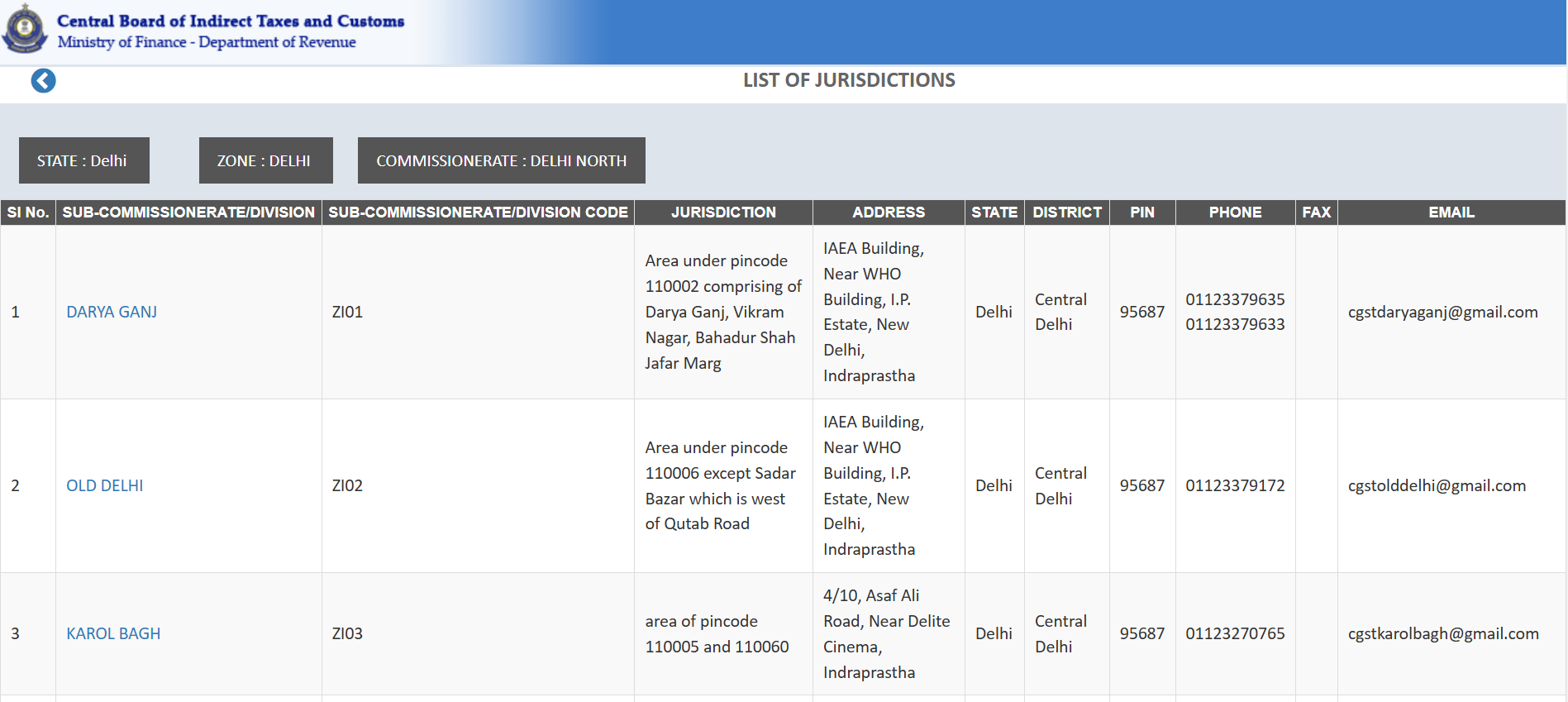
Step 5: Identify and note your jurisdiction range for tax compliance and filing.
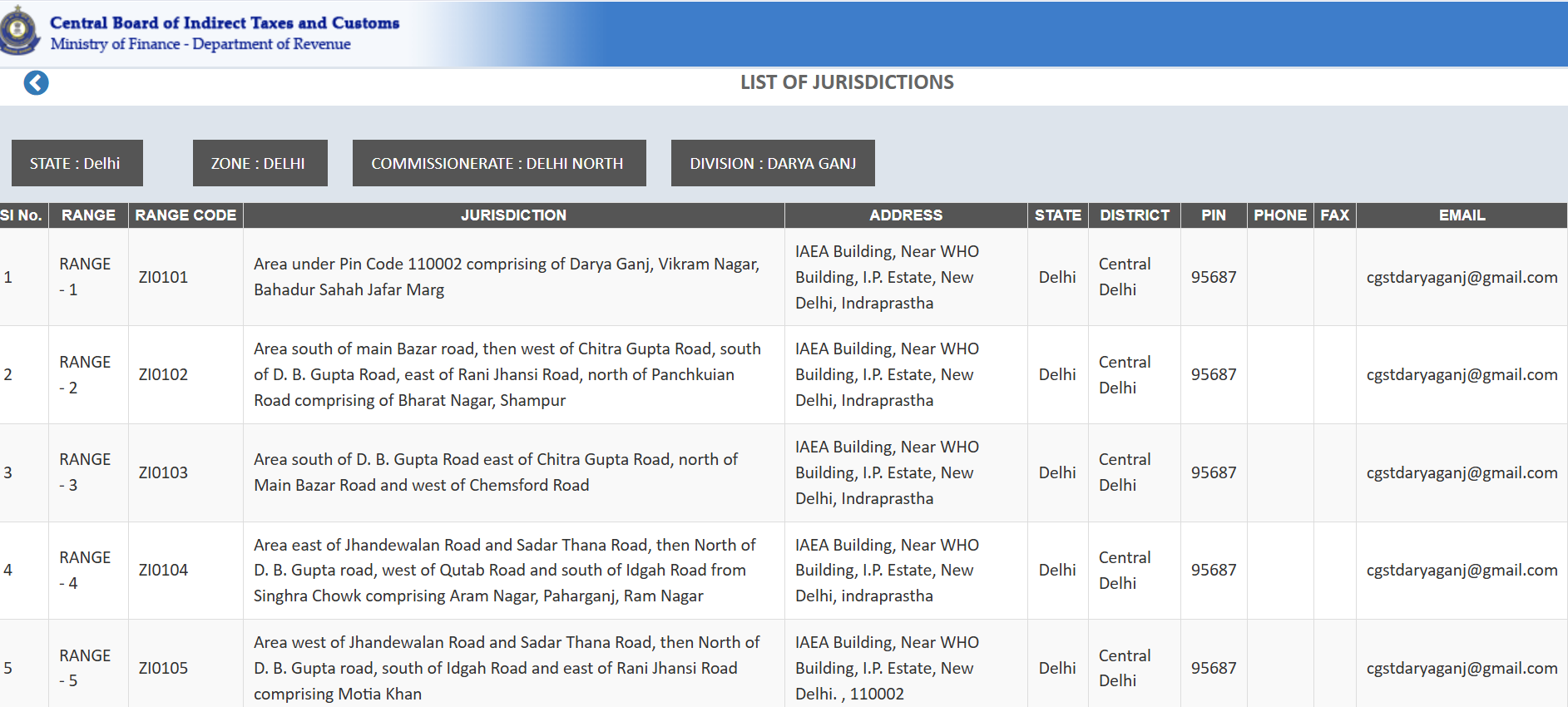
How GST Jurisdiction Is Determined
Your GST jurisdiction decides which authority—State or Central tax department—will handle your business for purposes such as audits, assessments and correspondence with GST officers.
The allocation of jurisdiction depends on:
- Location of your business premises
- Annual turnover
- Type of GST registration
Types of Jurisdiction
- State jurisdiction: For businesses dealing primarily in intra-state supplies (within the same state).
- Central jurisdiction: For those engaged in inter-state transactions (between different states).
Allocation Guidelines
- Turnover below ₹1.5 crore:
- 90% of taxpayers are placed under State jurisdiction
- 10% come under the Central jurisdiction
- Turnover above ₹1.5 crore:
- 50% of taxpayers are assigned to the State authorities
- 50% are assigned to the Central authorities
This system is designed to balance the workload between Central and state departments and ensure smoother tax administration across the country.
How to Check GST State Code in the Registration Certificate?
The GST State Code can be found in the GST Registration Certificate (Form REG-06) issued upon successful registration. Taxpayers can refer to this certificate at any time to verify their State and Central jurisdiction. The certificate provides detailed information, including the GSTIN, which contains the two-digit State Code as per the official GST State Code List. This ensures clarity in compliance, invoicing, and return filing.
How to Resolve the Problem of Wrongly Chosen GST Jurisdiction?
If a taxpayer selects the wrong GST jurisdiction while applying for registration, it can be corrected by submitting a request to the administrative or IT cell of the respective State GST department. This request must mention the correct jurisdiction details and the reason for the change. Once verified, the authorities will update the jurisdiction to ensure proper tax administration and compliance.
Conclusion
In conclusion, Understanding GST state codes and jurisdictions is crucial for businesses to maintain compliance and ensure smooth tax administration. These codes play a key role in GST registration, invoicing, return filing, and jurisdiction identification. Using the correct GST state code helps prevent errors, tax mismatches, and compliance issues. Businesses can streamline their GST processes and avoid legal complications by referring to the official GST State Code List and verifying jurisdiction details during registration.
Get hassle-free GST registration and ensure on-time return filing with IndiaFilings!