
IndiaFilings
Expert
Published on: Jul 30, 2026
Extension of TUFS Scheme
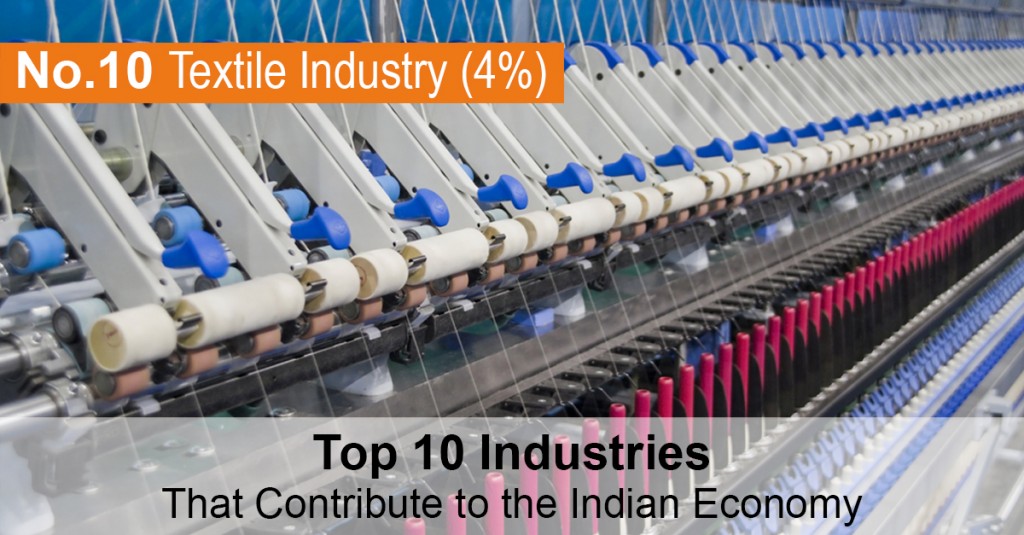
The Indian Textiles Industry has an overwhelming presence in the Indian economy with a contribution of nearly 14% of India's industrial production. Apart from providing one of the basic necessities of life, the textile industry also plays a pivotal role through its contribution to industrial output, employment generation and export earnings of the country. It is said that Rs.1 lakh of investment in machinery in the textile industry generates employment for seven persons in India. Therefore, to strengthen the textile industry in India and create globally competitive textile players, the TUFS Scheme was introduced by the Government wherein subsidy was provided for capital investment in the textile industry. In this article, we look at TUFS Scheme and the extension of TUFS Scheme in the 12th plan period.
 Textile Industry
TUFS Scheme
The Technology Upgradation Fund Scheme (TUFS) was introduced in 1999 to attract investments for modernization of the Indian Textile Industry. The scheme initially provided for 5% interest reimbursement. The scheme was initially approved from April, 1999 to 31st March 2004. Subsequently, the scheme was extended in 2004 and again in 2007 with modifications and further restructured upto 31st March 2013.
Now the TUFS Scheme has been extended until 31.3.2017 (31st March 2017) under the 12th plan period. The newly extended TUFS Scheme is officially named as the Revised Restructured - TUFS Scheme.
Click here to download the Resolution of TUFS Scheme 2015 Extension
TUFS Scheme Eligibility Criteria
TUFS Scheme benefit is available for benchmarked machinery in the following activities:
- Cotton ginning and pressing;
- Silk reeling and twisting;
- Wool scouring, combing and carpet industry;
- Synthetic filament yarn texturising, crimping and twisting;
- Spinning;
- Viscose Staple Fibre (VSF) and Viscose Filament Yarn (VFY);
- Weaving, knitting and fabric embroidery;
- Technical textiles including non-wovens;
- Garment / design studio / made-up manufacturing;
- Processing of fibres, yarns, fabrics, garments and made-ups;
- Production activities of Jute Industry.
Technology Upgradation means induction of state-of-the-art or near-state-of-the-art technology. Therefore, to be eligible for the TUFS scheme, at least a significant step up from the present technology level to a substantially higher one for such trailing segments would be essential. Existing textile businesses with or without expansion and new units by existing textile players are eligible for the TUFS Scheme. Further, Entrepreneurs, setting up new units with the appropriate latest technology (eligible technology) are eligible to receive the TUFS subsidy.
TUFS Scheme 2015 - Pattern of Assistance
Under the TUFS Scheme revised in 2015 under the 12th plan period, the following types of financial assistance is provided:
- Stand alone spinning units – 2% Interest Reimbursement (IR) for new stand alone / replacement / modernization of spinning machinery;
- For units having spinning capacity with forward integration having matching capacity in weaving/ knitting/processing/garmenting – 5% Interest Reimbursement;
- Weaving – (i) 6% Interest Reimbursement and 15% capital subsidy on brand new shuttleless looms or 30% Margin Money Subsidy (MMS) on brand new shuttleless looms for powerloom sector;
- 2% Interest Reimbursement or 8% Margin Money Subsidy on second hand imported shuttleless looms with 10 years vintage and with a residual life of minimum 10 years;
- For 30% Margin Money Subsidy – capital ceiling caps of RS. 5 crore and subsidy cap of Rs.1.5 crore would be adhered to for encouraging adequate investments by the SSI or MSME sector;
- Processing – 5% Interest Reimbursement and 10% capital subsidy for specified processing machinery. Common Effluent Treatment Plant or Effluent Treatment Plant will not be considered for support under TUFS.
- Garment – 5% Interest Reimbursement and 10% capital subsidy on specified machinery for garment units.
- Technical Textiles (including non-wovens) – 5% Interest Reimbursement and 10% capital subsidy on specified machinery required in manufacture on technical textiles.
- Handloom and silk sector – 5% Interest Reimbursement or 30% capital subsidy on benchmarked machinery.
- MSMEs including jute sector – 5% Interest Reimbursement or 15% Margin Money Subsidy– subsidy ceiling to be Rs. 75 lakh.
- Other segments - 5% Interest Reimbursement
- Cotton ginning and pressing;
- Wool scouring; combing and carpet industry;
- Synthetic filament yarn texturising, crimping and twisting;
- Viscose staple fibre and viscose filament yarn;
- Knitting and fabric embroidery;
- Weaving preparatory machines;
- Made-up manufacturing;
- CAD, CAM and design studio
- Jute industry
The interest reimbursement will be for a period of 7 years with 2 years of moratorium on implementation. Further, in addition to the interest reimbursement for investment in machinery, investments like factory buildings, pre-operative expenses and margin money for working capital are also eligible for benefit of reimbursement under the scheme (Apparel and Handloom Section Only).
The TUFS is further extended with revised guidelines in 2019 and launched into public as
"Amended TUFS" and the guidelines can be accessed below:To know more about Subsidies in India or TUFS Subsidy, visit IndiaFilings.com