
IndiaFilings
Expert
Published on: Jul 30, 2026
Company Incorporation VPP Scam
Entrepreneurs get their company registered and start a new business with all hope, looking forward to acquiring their first client. However, even before they can open a bank account, there are chances they could fall prey of a VPP Scam scheme. This article is aimed at helping Entrepreneurs not fall prey to the Company Incorporation VPP Scam and creating awareness.
Company Incorporation VPP Scam
During incorporation of a private limited company or registration of an LLP, details relating to the promoters of the company or Limited Liability Partnership (LLP) are made public information by the Ministry of Corporate Affairs(MCA). Scammers obtain this information from the MCA and use it to scam the promoters of a Private Limited Company or LLP.
What is VPP Post?
Value Payable System or VPP Post is a service from IndiaPost designed to collect payment from the receiver of the package for articles sent to them in the post. Items such as registered parcels, registered letters, registered book packets and newspapers can be sent through VPP Post with a mandate to collect payment on delivery. It is up to the receiver of the package to accept or reject the package.
VPP Post on obtaining DIN or DPIN
On filing the application of Director Identification Number (DIN) with the MCA, the current address of the DIN applicant is visible to the MCA. Using this information, scammers send a VPP Post most often containing a printed copy of the DIN Letter or other junk books or reading materials - requesting money.
It is important that the Entrepreneur / DIN Applicant rejects this VPP Post. DIN is provided in the form of a letter generated online and can be downloaded for free from the MCA website. Therefore, there is no necessity to pay for the items sent through VPP Post after obtaining DIN.
VPP Post on Company Incorporation
On incorporation of a private limited company or LLP, the information pertaining to the business is made publicly accessible in the MCA Website. Using this information, many Banks approach the promoters of business for opening a business account. At the same time, scammers also use this information to send a VPP Post containing books or periodicals that are requested by the promoters of the business.
The VPP Post sent after incorporation contains only a few books of very low value that are not required at any point for managing the business. Hence, it is important that the Entrepreneur or those residing at the registered office of the Company reject this VPP Post.
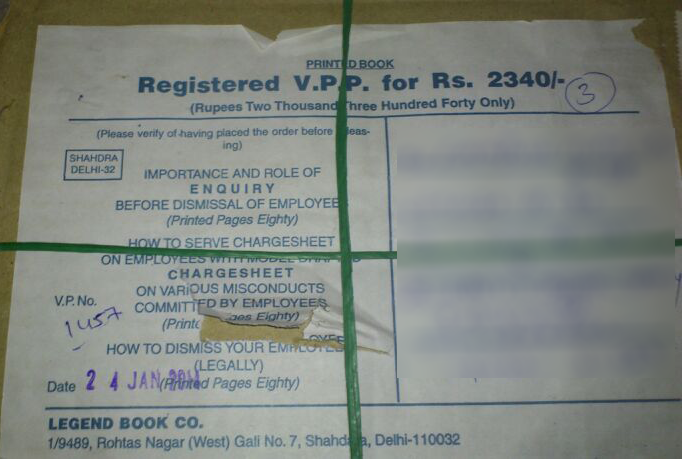 VPP Post Scam
Things to Remember
Those involved in the incorporation of a private limited company or LLP must always remember that the MCA nor any other Governmental Agency never sends any information through VPP Post. Therefore, it is important for anyone starting or managing a company to accept only those VPP that they have ordered. Never accept any VPP Post that you did not request.
For starting a new business in India, visit IndiaFilings.com.