
IndiaFilings
Expert
Published on: Jul 30, 2026
How to Start an Export Business
India is the 14th largest exporter in the world, exporting a wide range of goods and services. India's exports are growing each year and in a recent report by HSBC, India is set to be among the top 5 exporters in the world by the year 2030. With the Indian Government aggressively promoting manufacturing in India through campaigns like Make in India, exports from India is set to grow at a fast pace over the coming decade. In this article, we look at the licenses and registrations required to start an export business in India.
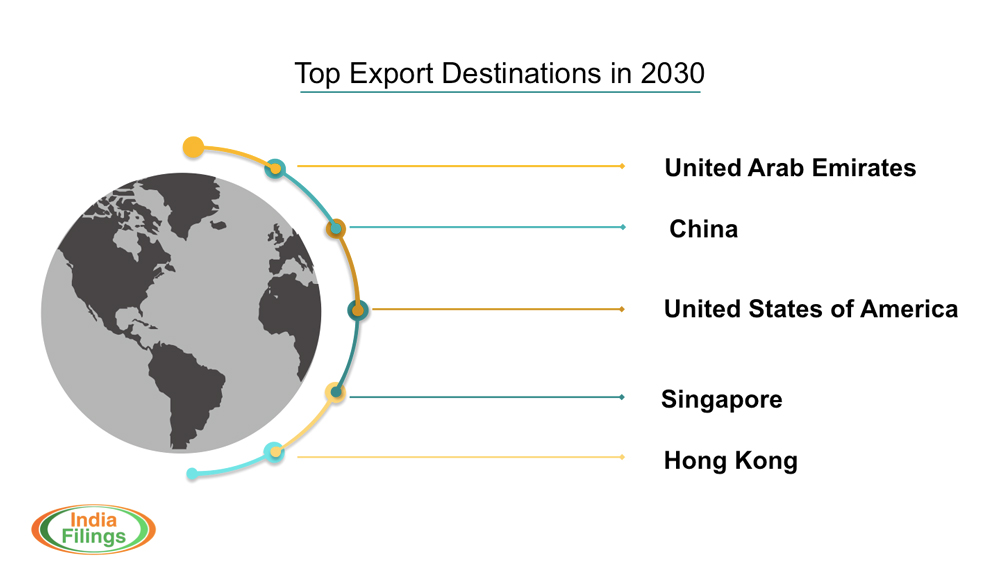 Top Export Destinations From India in 2030
Business Plan
Before starting any business, it is important to draw out a business plan and plan of action. For those starting an export business, it is important to cover the following aspects thoroughly:
- Product or service to be exported
- Souring of raw material for manufacturing or delivery of the product or service
- Costing of input costs
- Working capital requirement
- Long-term capital requirement (loan or equity)
- License or registration required for exporting
- Market study
- Customer study
- Transportation and logistics
Once, the above information is gathered and profitability is estimated, the Entrepreneur can commence the activities required to secure the necessary registrations and licenses.
Business Registration
The first item on any plan of action for starting an export business is deciding and registering the business entity. In the case of export business, it is recommended that Entrepreneur launch their venture as a Private Limited Company. Private Limited Company offers the promoters of the business - limited liability protection, transferability, easy access to bank loans and more. Further, foreign customers or clients prefer or mandate dealing with a registered corporate entity in India. Proprietorships and Partnership firms are usually classified as an unregistered business. Therefore, the registration of a Private Limited Company is necessary while starting an export business.
Tax Registration
After completing the business registration process, obtain the tax registration in the name of the business entity. PAN or Permanent Account Number is the first tax registration necessary for any new business. After obtaining the PAN, the business can open a bank account and start the process for loan syndication or equipment or raw material purchases - to commence businesses. Goods or services exported from India do not attract GST. However, GST Registration may be required for the business as it would purchase raw materials from outside of the state and service tax registration may be required to bill domestic clients. Therefore, it is recommended that after opening the bank account, the necessary steps are taken to obtain the relevant tax registration.
Import Export Code (IE Code)
An Import Export Code or IE Code is a must for any business involved in the export of goods from India. The Directorate General of Foreign Trade (DGFT) gives a unique IE Code to the businesses to track imports and exports from India. The following documents must available for obtaining IE Code in the name of the business:
- Name of the Company/LLP/Partnership Firm
- Certificate of Incorporation / Partnership Deed
- MOA & AOA of the Company, in case of LLP / Partnership Firm, the Partnership Deed
- Directors/Partners Identity Proof
- Directors/Partners Address Proof
- List of Directors / Partners
- Bank Reference Letter
- Name of the Proprietorship / Individual
- Identity Proof
- Address Proof
- Bank Reference Letter
Other Licenses or Registrations
To start an export business, the above registrations and licenses may be sufficient in most states. However, based on the state, further registration such as shop & establishment act license, factory license, ESI / PF registration, etc., may also be required. Also, in case the business proposes to manufacturer and export items like food products, approval from FSSAI may also be required.
To start an export business in India, visit IndiaFilings.com or talk to an IndiaFilings Business Advisors.