
IndiaFilings
Published on: Aug 27, 2026
Patta Chitta
Patta and Chitta are land revenue records maintained by the Tamil Nadu Government. Patta and Chitta documents play an important role in all property-related transactions in Tamil Nadu like
property transfer, property pledge, property legal opinion, etc. In this article, we look at
Patta Chitta
in detail. To obtain Patta Chitta for your property or please get in touch with an IndiaFilings Advisor at
sales@indiafilings.comWhat is Patta?
Patta is a government record containing the details of land ownership, area of land, location with survey details. While purchasing a property, verifying the patta documents will ensure that the property is being purchased from the rightful owner as per the Government record. For a
clear property title, the seller must have a valid patta for the land that he/she is selling. After the purchase of land, the buyer must apply to the concerned Taluka office for the transfer of patta to the buyer's name to maintain a clear title. A sample patta document is provided below for reference:
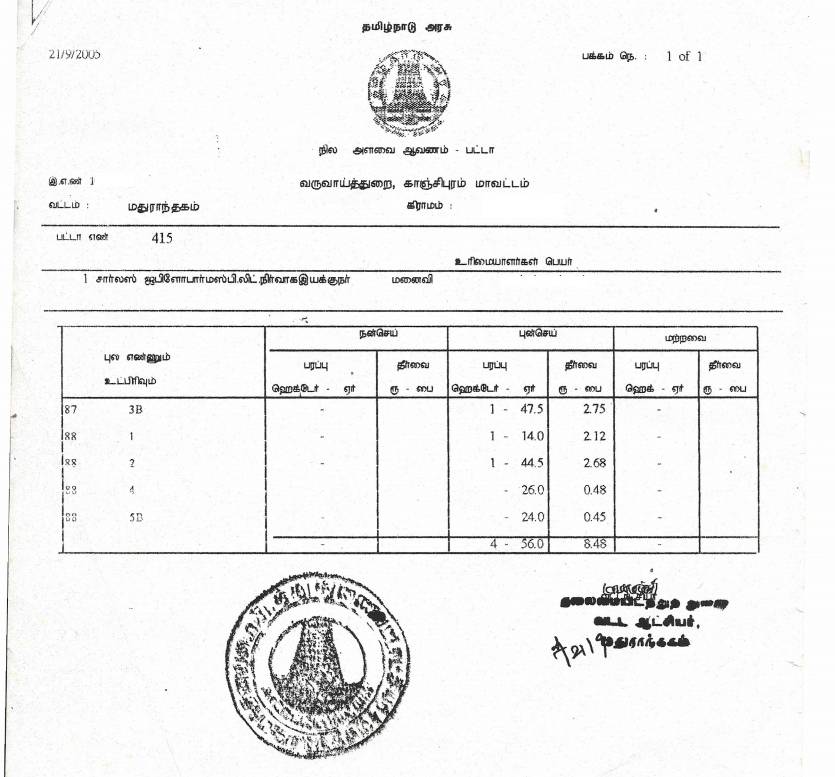
Patta Sample
What is Chitta?
Chitta is a government document pertaining to immovable property that is maintained by the concerned Village Administrative Officer (VAO) and Taluka office. In the Chitta, the classification of the land between nanjai and Punjai is provided along with the details of the owner of the property. Nanjai refers to land with plenty of water, usually with water bodies like rivers, canals, ponds, etc. Punjai refers to land with fewer water bodies and with facilities such as bore-wells.
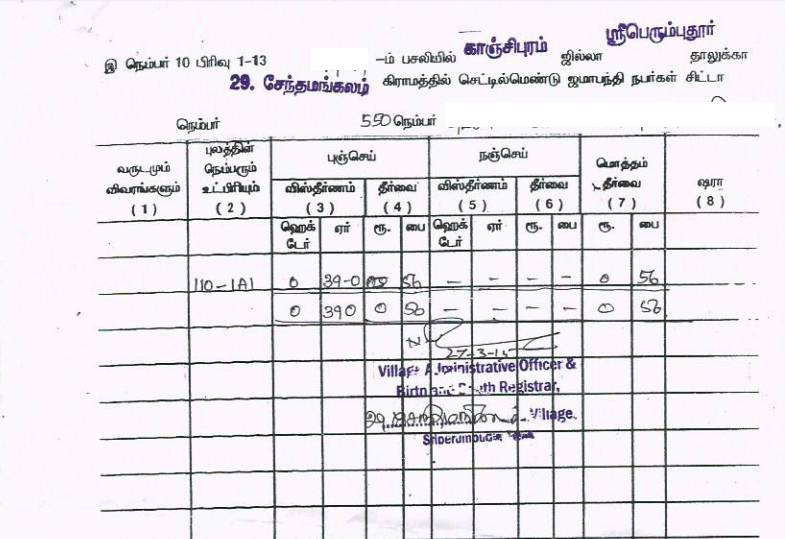
Chitta Sample
How to Get Patta Chitta?
The Government of Tamil Nadu has computerized records of Patta Chitta and made the same available online. You can access Patta Chitta online or by approaching the concerned Taluka office. The following is the procedure for obtaining Patta Chitta online.
Step 1: Go to Patta Chitta Website
The Tamil Nadu Patta Chitta website is available in two languages - English & Tamil.
Step 2: Select View Patta and FMB, Chitta or TSLR Extract
Select the Patta and FMB, Chitta, or TSLR Extract and choose the district in which the property is located.
Step 3: Details of Property
The Patta Chitta requires details like Taluk, Village, Ward, and Block along with the Survey Number and Sub Division Number. The following image shows the details of the property.
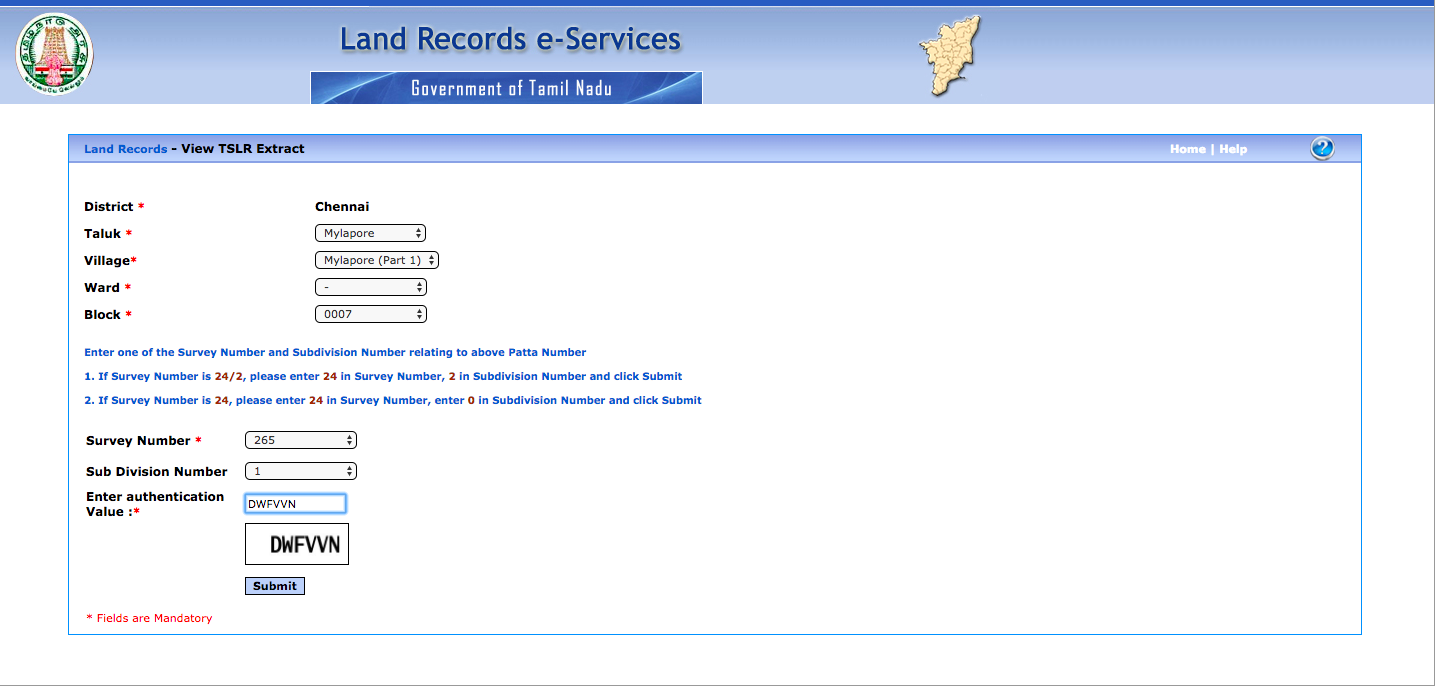
Step 4: Patta Chitta from Town Survey Land Register
On submission of the property details, the following Certificate from the Town Survey Land Register would be issued online with details of the property. The Certificate would contain details like type of construction on the property, municipal door number, locality, type of land, etc., The issued Certificate's validity can be checked online here.
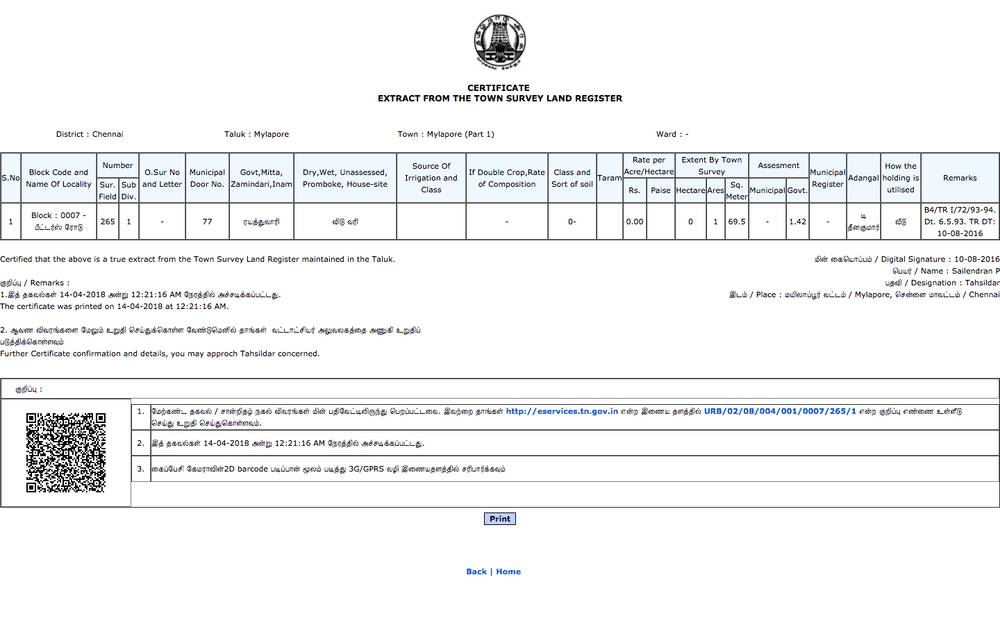
Transfer of Patta Chitta
Patta Chitta verified by the concerned taluka office as show under Patta and Chitta may be requested by a prospective buyer or banker sometimes. In such cases, the property owner can approach the concerned taluka office or village administrative officer for the same. The transfer of Patta Chitta on account of property transfer requires an application in the application form shown below:
Download Patta Transfer Application Form
Documents Required for Patta Transfer
Along with the patta transfer application, the following documents must be submitted for patta transfer:
- Signed patta transfer application
- Copy of sale deed. Verification requires original documents.
- Proof of possession like EB bill or property tax receipt
- Encumbrance certificate