
Jeyaraj Allwyn
Expert
Published on: Sep 16, 2026
Micro Financing Schemes Of NBCFDC
"The poor stay poor not because they are lazy but because they have no access to capital."
- Milton Friedman
This article provides insights into the Micro Financing schemes under the aegis of National Backward Classes Finance & Development Corporation (NBCFDC). We will explore the salient features, eligibility criteria, and the financial pattern of these schemes.
Understanding Micro Financing
Microfinance identifies economically disadvantaged individuals as rich sources of energy and knowledge. It empowers these individuals by providing financial tools necessary for self-sufficiency, as opposed to mere handouts. This approach addresses poverty through sustainable financial solutions, enabling underprivileged communities to thrive.
Role of National Backward Classes Finance & Development Corporation (NBCFDC)
The NBCFDC functions under the Ministry of Social Justice and Empowerment, focusing on economic and developmental activities for the Backward Classes. It aids the weaker segments in skill development and self-employment initiatives.
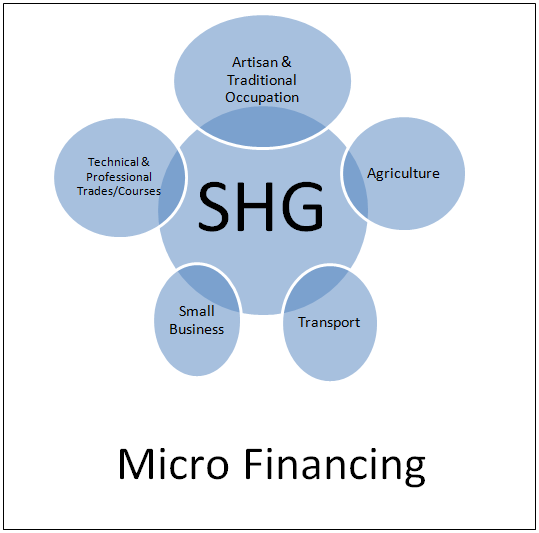
Finance is provided through State Channelising Agencies (SCAs) and Self Help Groups (SHGs). NBCFDC supports self-employment in various sectors including:
- Agriculture and Allied Activities.
- Small Business ventures.
- Artisan and Traditional Occupations.
- Technical and Professional Trades/Courses.
- Transport and Service Sector.
Key Financing Schemes of NBCFDC
- Micro Finance
- Mahila Samriddhi Yojana
- Small Loan Scheme
Primary Objectives
Micro Finance: This scheme serves the microfinance needs of small entrepreneurs within the target group, facilitated through nominated Channelising Agencies.
Mahila Samriddhi Yojana: Aimed at providing microfinance to women entrepreneurs in the target group, fostering their growth and self-sufficiency.
Small Loan Scheme: Offers microfinance to individuals starting small businesses.
Note: All schemes have a maximum loan limit of Rs.60,000/- per beneficiary, and SHGs can have up to 20 women members.
Comparative Analysis of Schemes
| MICROFINANCE | MAHILA SAMRIDDHI YOJANA | SMALL LOAN SCHEME | |
| Implementation | Implemented through SCAs in both rural and urban regions, focusing on unserved areas. | Executed by Channel Partners in rural and urban settings, prioritizing previously untouched regions. | Rolled out via SCAs/Banks. |
| Eligibility of the Beneficiary | Members of Backward Classes below twice the poverty line (below Rs.3.00 Lakh).SCA/Banks must allocate at least 50% of funding to individuals with an annual family income up to Rs.1.50 Lakh.75% of an SHG's members must be from Backward Classes; remaining 25% may include other weaker sections. | Women from Backward Classes, living below twice the poverty line, with an annual family income of less than Rs.3.00 Lakh.At least 50% of funds go to those with family income under Rs.1.50 Lakh. | Applicants from Backward Classes below twice the poverty line.Annual family income must be under Rs.3.00 Lakh.50% of funds should target families earning below Rs.1.50 Lakh annually. |
| Pattern of Finance | 1. NBCFDC loan: 90% 2. SCA/Bank Loan: 5% 3. Beneficiary Contribution: 5% | 1. NBCFDC Loan: 95% 2. SCA/Beneficiary Contribution: 5% | 1. NBCFDC Loan: 85% 2. SCA/Bank Loan: 10% 3. Beneficiary Contribution: 5% |
| Utilization Period | Four months from disbursement | Four months from disbursement | Not Applicable |
| Rate of Interest | 1. From NBCFDC to SCA: 2% p.a. 2. SCA to SHG: 5% p.a. | 1. From NBCFDC to SCA: 1% p.a. 2. SCA to Beneficiary: 4% p.a. | 1. From NBCFDC to Channel Partner: 3% p.a. 2. SCA/Bank to Beneficiary: 6% p.a. |
| Repayment | Quarterly installments within 48 months | Quarterly installments within 48 months | Ten years |
Complementary to these schemes, other developmental initiatives such as Handloom Weavers' Loan Waiver Scheme align with NBCFDC's mission, promoting financial independence among marginalized communities. For further expansion into related sectors, explore details on Land Accelerator South Asia 2022 and developments in retail franchises.
For those seeking additional guidance on financial management and entrepreneurship, consider learning about income tax rates for proprietorships and business registration, as they are integral to fostering sustainable growth within underrepresented communities.