
IndiaFilings
Published on: Sep 25, 2026
How to Get Halal Certification in India
A Halal Certificate is essential for food and food-related products, primarily in Islamic countries. Halal, a term from the Quran, means "permitted" or "lawful." It refers to food and other items permissible for Muslims according to Islamic law, known as Shariah. Halal ensures cleanliness in all aspects of life, guaranteeing that consumed foods are clean, hygienic, and safe. The demand for Halal Certification is rising as businesses aim to cater to this market. This guide explores the procedure for obtaining Halal Certification in India.
Halal Certification Bodies
Various Halal Certification Bodies in India offer Halal Certification. Some of them include:
- Halal India Private Limited
- Halal Certification Services India Private Limited
- Jamiat Ulama-E-Maharashtra - a State unit of Jamiat Ulama-E-Hind
- Jamiat Ulama-i-Hind Halal Trust
Businesses can approach any of these Certification Bodies to obtain Halal Certification. A competent authority will audit to ensure the business:
- Does not use or contain any parts or substances prohibited by Shariah.
- Is free from impurities according to Shariah.
- Uses equipment clean from anything impure per Shariah standards.
- Avoids contamination during preparation, processing, or storage with non-halal items.
Types of Halal Certification
The type of Halal Certification depends on the nature of the business. Commonly, Halal Certification is obtained for places like restaurants, hotels, slaughterhouses, and packaging facilities. Besides the food industry, non-alcoholic beverages, pharmaceuticals, healthcare products, cosmetics, and more can also obtain Halal Certification. Businesses can choose from several schemes:
- Food, Beverage, and Catering Scheme
- Restaurant Scheme
- Industrial Scheme
- Abattoir Scheme
- Warehouse or Storage Scheme
- Product Endorsement Scheme
Halal Certification Procedure
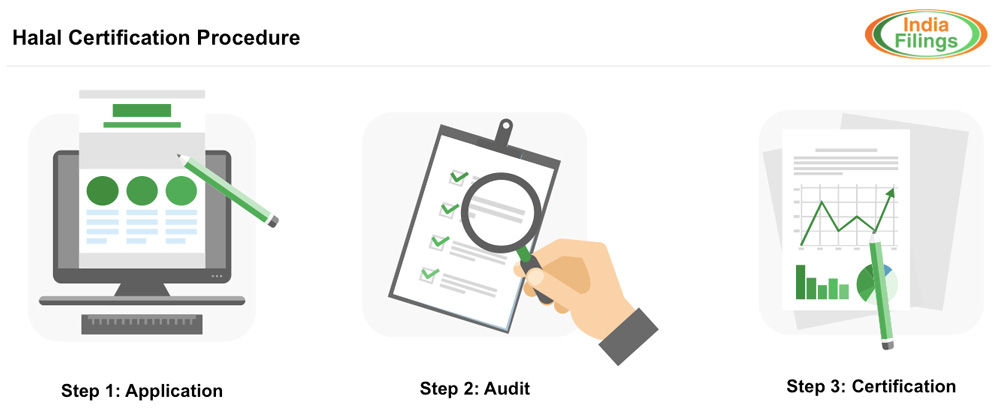
Halal Certification Procedure
Step 1: Application
Businesses must apply to a Certification Body for Halal Certification. Understanding requirements is crucial at this stage to ensure compliance with all Halal, system, and staffing criteria. For more details, refer to our essential information guide on Halal Certification.
Step 2: Audit
After verifying the application, auditors—typically a Shariah Auditor and a Technical Auditor—will conduct an inspection. Key areas of the audit include:
- Documentation
- Processing, handling, and distribution
- Storage, display, and serving
- Cleanliness, sanitation, and safety
- General aspects of the premises
- Tools and equipment
- Packaging and labeling
During the audit, businesses may need to provide acceptance criteria for raw materials, a certificate of analysis, and Halal certificates for individual components. Once complete, parties will prepare and sign an audit report. To delve deeper into compliance, our quality and compliance guide offers more insights.
Step 3: Certification
Post-audit, a Technical Committee reviews the documentation and the audit report. If the findings meet the Halal Certification criteria, the Certification Body issues the Halal Certificate.
Benefits of Halal Certification
Halal Certification offers significant advantages, providing a competitive edge. Key benefits include:
- Access to a market of over 2 billion people worldwide.
- Permission to use the Halal logo.
- Enhanced marketability in Muslim-majority countries.
- Improved quality and hygiene of food and products.
Discover why companies seek Halal Certification by visiting our detailed article on the motivations behind companies pursuing certification.
For more information about Halal Certification, contact an IndiaFilings.com Business Advisor
Related Guides
What is Halal Certification in India? 10 Things You Need to Know
For a step-by-step guide on applying online easily, visit our application process overview.