

Renu Suresh
Expert
Published on: Aug 12, 2026
How to File Income Tax Return of Deceased Person in India
The season for filing income tax returns is here again! Typically, the deadline for individuals to file their returns is July 31, 2024, for the financial year 2023-24. We usually refer to living persons when we mention individuals, but there's an exciting twist. The Income Tax Act mandates that a deceased person's tax return be filed. You might wonder how a deceased individual can file their return. This responsibility falls to the Legal Heir. According to the law, a legal heir must file an income tax return on behalf of the deceased. In this article, we will explore how to file the income tax return of a deceased person in India. Need to File an ITR for a Deceased Person? Let IndiaFilings help you navigate the process as a legal heir. Click here to get expert assistance and ensure ease of compliance. Get Started!Who is Eligible to File the ITR for Deceased Persons?
As mentioned above, only the legal heir can file the income tax return (ITR) for a deceased person, covering the income earned up until the date of their death. This process requires the legal heir to register as a representative assessee on the e-filing portal. Additionally, they must ensure that their own and the deceased's permanent Account Numbers (PANs) are registered on the system.Who is a Legal Heir?
A legal heir is an individual designated under the law to inherit the assets of a deceased person. To register as a legal heir and manage the deceased's assets, one of the following documents can be used as proof of legal heirship:- Certificate of Legal Heirship: Issued by a court of law, this certificate recognizes legal heirs of the deceased.
- Certificate of Legal Heirship: Issued by the local revenue authority, this certificate also identifies the legal heirs.
- Certificate by Local Revenue Officials: This is provided to the remaining family members, listing them as the legal heirs.
- Registered Will: A will that has been legally documented and registered, clearly stating the distribution of the deceased's assets.
- Family Pension Certificate: Issued by the State or Central government, this certificate often serves as proof for the spouse or children that they are legal heirs for pension purposes.
- Certificate of Surviving Family Members: Commonly issued by local revenue authorities (like Municipalities or Nagarpalika), this document lists the surviving family members as legal heirs. Since this certificate is often issued in a regional language, it must be translated into English or Hindi and notarised for official use.
Register as a Legal Heir on the Income Tax E-filing Portal
To file income tax returns on behalf of a deceased person, the legal heir must register on the income tax e-filing website. This process ensures that the legal heir has the authority to manage the tax filings of the deceased. The deceased's permanent Account Number (PAN) and the legal heir must be registered on the e-filing portal. The legal heir can complete this registration if the deceased person's is not registered. HerHere'sw to proceed:Steps to Register as a Legal Heir
Step 1: Visit the Income Tax Department e-filing portal. Use your user ID and password to log in.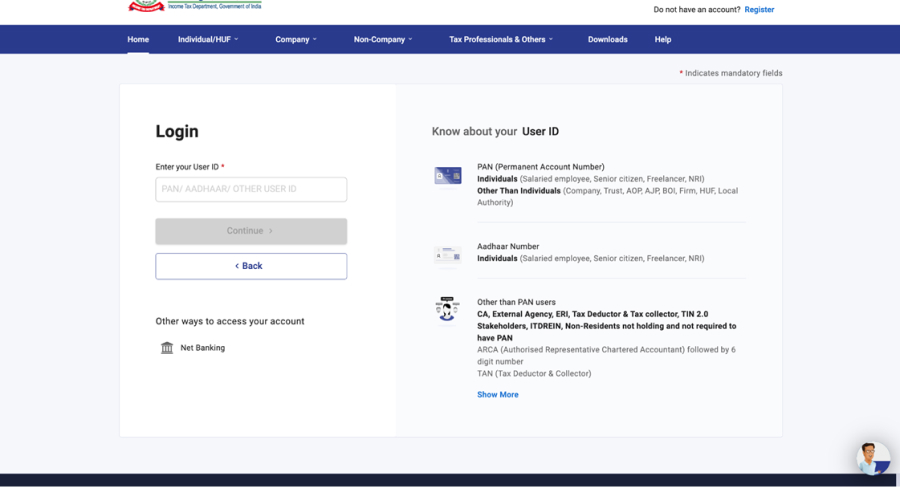 Step 1 Register as a Legal Heir
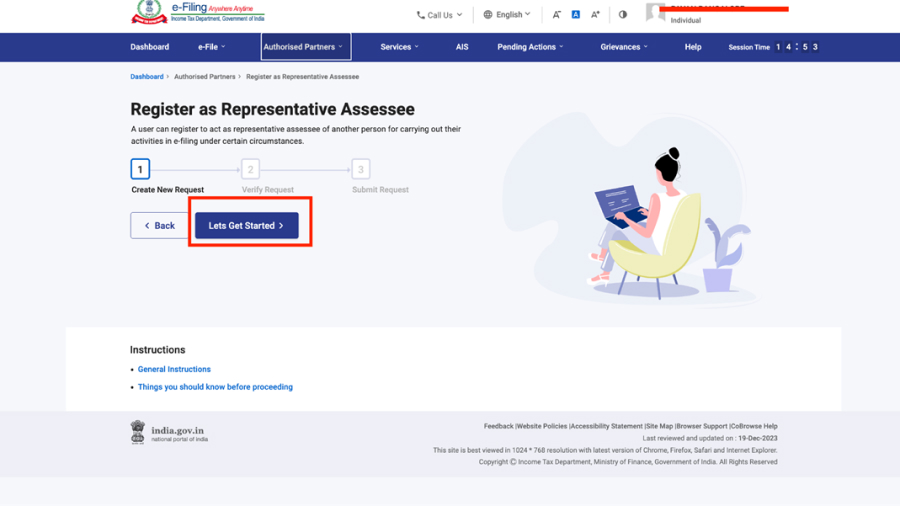
Step 2: Navigate to ‘Authorised Partners’ > ‘Register as Representative’. Then click on ‘Let’s Get Started’.
Step 1 Register as a Legal Heir
Step 2: Navigate to ‘Authorised Partners’ > ‘Register as Representative’. Then click on ‘Let’s Get Started’.
 Register as a Legal Heir - Step 2
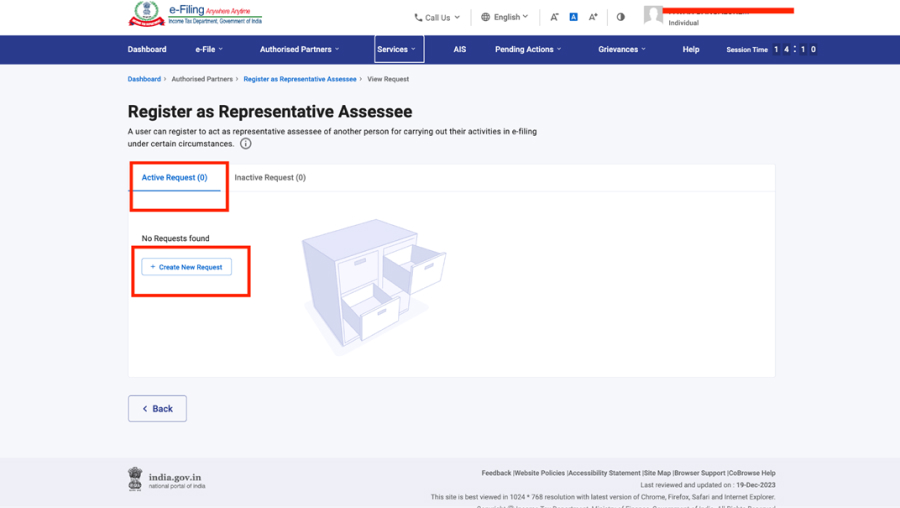
Step 3: Select ‘Create New Request’ to begin the process.
Register as a Legal Heir - Step 2
Step 3: Select ‘Create New Request’ to begin the process.
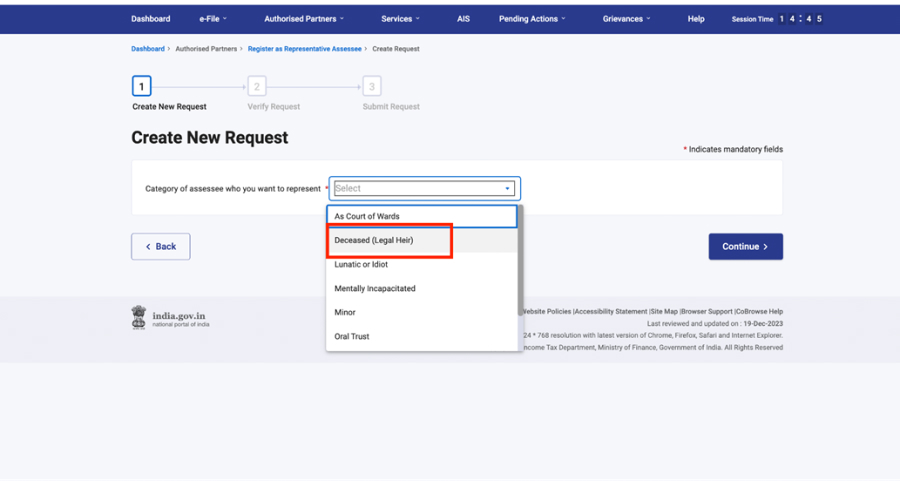
 Register as a Legal Heir - Step 3
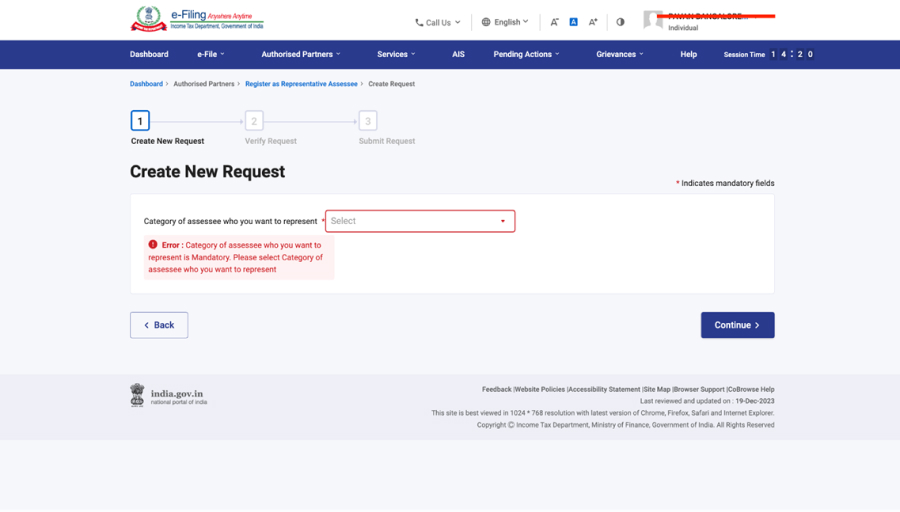
Step 4: Choose the appropriate category. Fill in the PAN details of the deceased, the date of death, and specify the reason for registration.
Register as a Legal Heir - Step 3
Step 4: Choose the appropriate category. Fill in the PAN details of the deceased, the date of death, and specify the reason for registration.
 Register as a Legal Heir - Step 4
Step 5: Upload the required documents which typically include the legal heir certificate, death certificate of the deceased, and any other documents as specified by the portal.
Register as a Legal Heir - Step 4
Step 5: Upload the required documents which typically include the legal heir certificate, death certificate of the deceased, and any other documents as specified by the portal.
 Register as a Legal Heir - Step 5
Step 6: Click on ‘Proceed’ and then ‘Verify the Request’ to ensure all details are accurate.
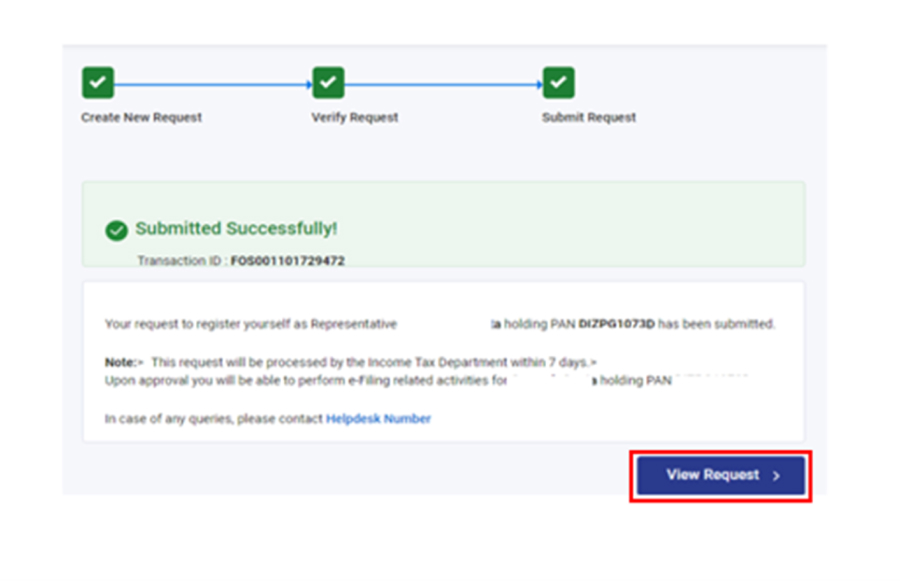
Step 7: Finally, click on ‘Submit Request’. You will receive an acknowledgment from the department confirming the submission.
Register as a Legal Heir - Step 5
Step 6: Click on ‘Proceed’ and then ‘Verify the Request’ to ensure all details are accurate.
Step 7: Finally, click on ‘Submit Request’. You will receive an acknowledgment from the department confirming the submission.
 Register as a Legal Heir - Step 5
Note: Specifying the ‘Reason for Registration’ as 'Representative Assessee' when filling out the form is crucial. This designation is essential to clarify that you are acting on behalf of the deceased state.
Register as a Legal Heir - Step 5
Note: Specifying the ‘Reason for Registration’ as 'Representative Assessee' when filling out the form is crucial. This designation is essential to clarify that you are acting on behalf of the deceased state.
Approval Process for Legal Heir Registration on the E-filing Portal
After the legal heir completes the registration process on the e-filing portal, the request is forwarded to the e-filing administrator for verification. The administrator assesses the request and determines whether to approve or reject it based on the provided documentation and information.Legal heir Registration Approval Process
- Verification by E-filing Administrator: Once the registration request is submitted, the e-filing administrator reviews all the documents and information provided. The administrator has the authority to approve or reject the request based on the accuracy and validity of the submission.
- Approval: If the request is approved, the legal heir gains full access to the deceased's account. This enables the legal heir to use all services available on the portal, acting on behalf of the deceased.
- Rejection: If the request is rejected, the legal heir will receive a notification stating the reason for rejection. Common reasons include incorrect information or documentation.
- Action After Rejection: If the request is rejected, the legal heir should review the reasons provided and rectify any issues. This may involve re-uploading correct documents or correcting any misinformation in the application.
- Accessing the Deceased’s Account: Once approved, the legal heir can access the deceased taxpayer's account by changing the status from 'Self' to 'As a Legal Heir or Representative'. This switch allows the legal heir to view all information and file income tax returns (ITR) for the deceased.
Important Considerations
- Ensure all documents are clear and correctly uploaded to avoid delays in the approval process.
- Monitor notifications from the e-filing portal for updates on your request.
- Familiarize yourself with the portal’s functionality to manage the deceased’s tax matters seamlessly.
Documents Required to File ITR on Behalf of a Deceased Person
Here are the documents required to file an Income Tax Return (ITR) on behalf of a deceased person:- Death Certificate of the deceased person.
- PAN Card of the deceased person.
- Self-attested PAN card copy of the legal heir.
- Legal Heir Certificate.
- Any applicable court order passed in the name of the deceased.
How to File ITR as a Legal Heir for a Deceased Person"
Once your registration as a legal heir is approved, you are authorised to file an Income Tax Return (ITR) on behalf of the deceased person. The process of filing the ITR for the deceased is similar to that of an individual filing a return. Here you can proceed:Steps to File ITR as a Legal Heir
- Log in to E-Filing Portal: Use your credentials to log in to the Income Tax Department e-filing portal.
- Choose the Correct Assessment Year: Select the assessment year for which you must file the ITR for the deceased.
- Please complete the ITR Form: Complete the ITR form as you would for an individual, using the deceased person's complete details up until the date of their death.
- Enter Legal Heir Information: In the ITR form, fill in the details of the legal heir in the capacity of the representative.
- Submit the ITR: After completing the form, submit it.
E-Verification of the Return
Once the ITR is filed, it needs to be verified. There are multiple ways to confirm the return:- Aadhaar OTP: If the legal heir’s Aadhaar is linked to their PAN, they can use the OTP received on their Aadhaar-registered mobile number to e-verify the return.
- Net Banking: Log in to your net banking account linked to the legal heiheir'sN to e-verify the return.
- EVC Through Bank Account: To e-verify, generate an Electronic Verification Code (EVC) through your bank account linked with the PAN.
Physical Verification
- If you choose not to use electronic methods for verification:
- Sign the ITR Acknowledgement (ITR-V): The legal heir should sign the ITR-V form.
- Send the ITR-V to CPC: Mail the signed ITR-V to the Central Processing Centre (CPC) in Bengaluru within 120 days of filing the return. The address is:
- Income Tax Department – CPC,
- Post Box No. 1,
- Electronic City Post Office,
- Bengaluru - 560100,
- Karnataka, India
- Ensure that all details entered match the income details of the deceased until the date of death.
- Keep all necessary documents, such as the Death Certificate and Legal Heir Certificate, handy in case they are required for verification.
- Check the latest guidelines on the e-filing portal for any updates to the process or documentation.
Calculating Income for Tax Filing as a Legal Heir
As a legal heir, you are responsible for filing the tax return on behalf of the deceased for the income earned from the start of the year until the date of death. This income should be calculated and taxed as if the deceased were still alive. To determine this income accurately, you may need to consult bank statements, investment records, and other relevant financial documents. Any income generated from the deceased's assets after the date of death is not included in the deceased's return. Instead, this income is taxable in the hands of the legal heir and should be added to their income when they file their tax return. Essentially, you will file the return for the deceased using the same procedures and considerations as for a living individual, ensuring all due taxes are accurately calculated and paid.| Aspect | DecDeceased'scome (Until Date of Death) | Legal HeiHeir'scome (After Date of Death) |
| Income Inclusion | Income until the date of death. | Income generated from the deceased's assets after the date of death. |
| Tax Return | Included in the deceased's annual tax return. | Added to the legal income and reported in their tax return. |
| Taxable in the Hands of | The deceased (the legal heir files on their behalf). | The legal heir. |
| Filing Procedure | Follow standard procedures as if the deceased were alive, with the legal heir filing the return on behalf of the deceased. | The legal heir includes this income in their tax return and computes tax accordingly. |
| Purpose of Filing | To settle any tax dues on income earned up to death. | To report and pay tax on income derived from the deceased's assets after their death. |
| Key Considerations | Ensure all income until the date of death is accurately calculated and reported. | Ensure that income from the deceased's sets is correctly added to the legal heir's income from the date of death onwards. |
| Income Type | Period | Amount |
| Rental Income | 1/4/23 to 15/8/23 | ₹3,50,000 |
| Interest Income | 1/4/23 to 15/8/23 | ₹1,00,000 |
| Income Type | Period | Amount |
| Rental Income | 16/8/23 to 31/3/24 | ₹4,90,000 |
| Interest Income | 16/8/23 to 31/3/24 | ₹1,75,000 |