IndiaFilings

Expert

Published on: Jun 24, 2026

How To Create An Invoice?

Creating, issuing and tracking invoices is an important part of doing business and essential for having steady cashflow into the business. Hence, it is important for all Entrepreneurs to know How To Create An Invoice and the basic contents included in an invoice. In this article, we review the process for creating an invoice in India?

Why Create an Invoice?

Creating an invoice is required to indicate the items or services provided and the rates applicable to various stakeholders. An invoice is required to collect payment from the customer, account for sales, create financial statements and pay proper taxes to the government. Further, invoices also serve as a supporting document for a registered dealer and can be used to claim

input service tax or VAT credit. Hence, invoicing plays a key role in any business.

Contents of an Invoice

All invoices must contain the following elements:

  • Name, address and registration number (service tax or VAT or others) of the supplier
  • Name, address and registration number of the buyer
  • Date of invoice
  • Nature of goods or services supplied or rendered
  • Quantity of goods or service supplied or rendered
  • Value of goods or services supplied or rendered
  • Rate of taxes (service tax or VAT), as applicable
  • Discount offered, if any
  • Total amount excluding taxes
  • Total taxes payable
  • Total amount including taxes

When to Create an Invoice?

Invoice can be created once the supply of goods / service is made or advance for supply of goods / service is received. In case of continuous supply of goods or service, invoice can be raised within a prescribed period from the date of completion of a milestone or as per agreement. It is best to create an invoice as early as possible to ensure timely payment is made by the buyer. However, it is important to note that once an invoice is created, a tax liability is also created. Hence, it is recommended that invoice be raised only for those good/services for which payment is likely or has already been made.

Invoice Format

Invoice can be issued to the buyer in either electronic or printed format. There are no specific format specified by the Government. However, all invoices must have the essential details listed above as mandated by law. Further, all invoices must have a serial number and the same serial number must not be used in more than one invoice.
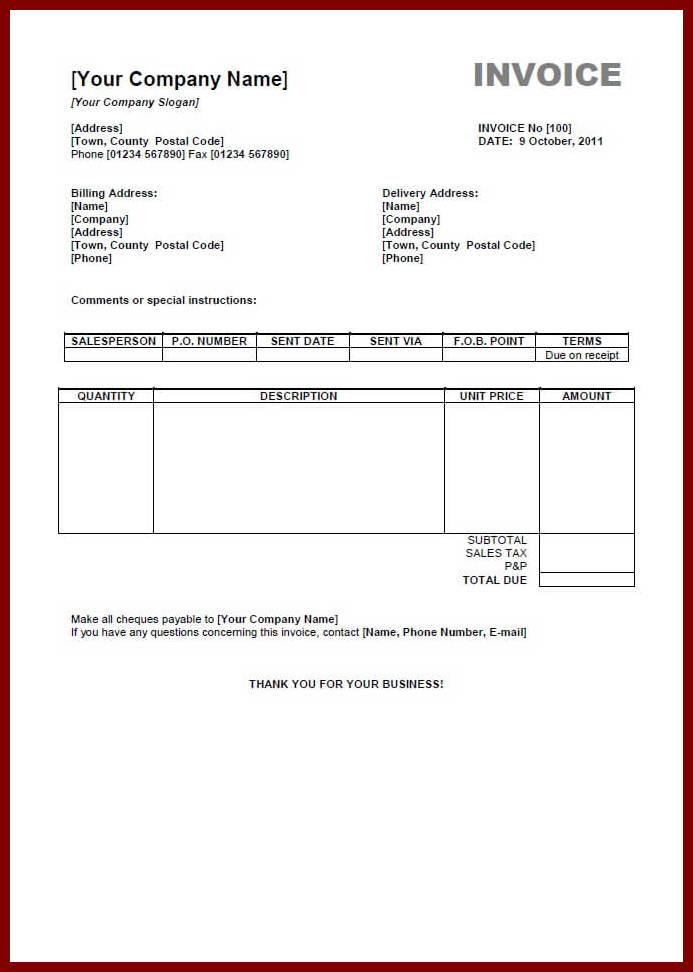
Invoice Format Invoice Format

Invoicing Best Practices

  • Invoices can be raised in triplicate with an original provided to the buyer, duplicate for transporter, triplicate for supplier and an extra copy, if required.
  • All invoices must be supported by purchase order of the buyer, packing list (if applicable) and delivery challan.
  • Invoice should be authenticated by an authorised signatory of the supplier.
Back to Learn

Frequently Asked Questions

Common questions about Creating an Invoice in India: Essential Details.

An invoice is a commercial document that records a transaction between a seller and a buyer. It is crucial for businesses as it serves as proof of the goods or services provided and the amount owed by the customer. Invoices are essential for maintaining proper accounting records, tracking sales, ensuring steady cash flow, and paying applicable taxes to the government.
An invoice must contain the name, address, and registration number of both the supplier and the buyer, the date of the invoice, a description of the goods or services provided (including quantity and value), applicable tax rates, any discounts offered, the total amount excluding taxes, the total tax amount, and the final total amount payable.
An invoice can be created once the goods or services have been supplied or when an advance payment has been received for the supply of goods or services. In case of continuous supply, an invoice can be raised periodically as per the agreement or upon completion of specific milestones.
No, there is no specific format prescribed by the government for invoices in India. However, all invoices must contain the essential details mandated by law, such as the information mentioned in the previous question. Additionally, invoices must have a unique serial number.
Some best practices for invoicing include issuing invoices in triplicate (original for the buyer, duplicate for the transporter, and triplicate for the supplier), supporting invoices with purchase orders, packing lists, and delivery challans, and having invoices authenticated by an authorized signatory of the supplier.
Invoices should be generated as soon as possible after the goods or services have been provided or an advance payment has been received. This ensures timely payment from the buyer and proper accounting of sales and taxes. However, invoices should only be raised for transactions where payment is likely or has already been made.
Yes, invoices can be issued in electronic format, in addition to printed format. As long as the invoice contains all the mandatory elements and has a unique serial number, it can be issued electronically.
Yes, invoices are essential for registered dealers or businesses to claim input service tax or VAT credits. Invoices serve as supporting documents for these claims and must be maintained properly.
If an error is found in an issued invoice, it is advisable to cancel the incorrect invoice and issue a new, corrected invoice with a different serial number. Proper documentation should be maintained for the cancelled invoice and the reason for cancellation.
Invoices can be raised in advance, before the supply of goods or services, only if an advance payment has been received from the buyer. In such cases, the invoice should clearly indicate that it is for an advance payment and should be supported by relevant documentation.