IndiaFilings

Expert

Published on: Jul 30, 2026

Gst Annual Return Due Date

The Government has extended the

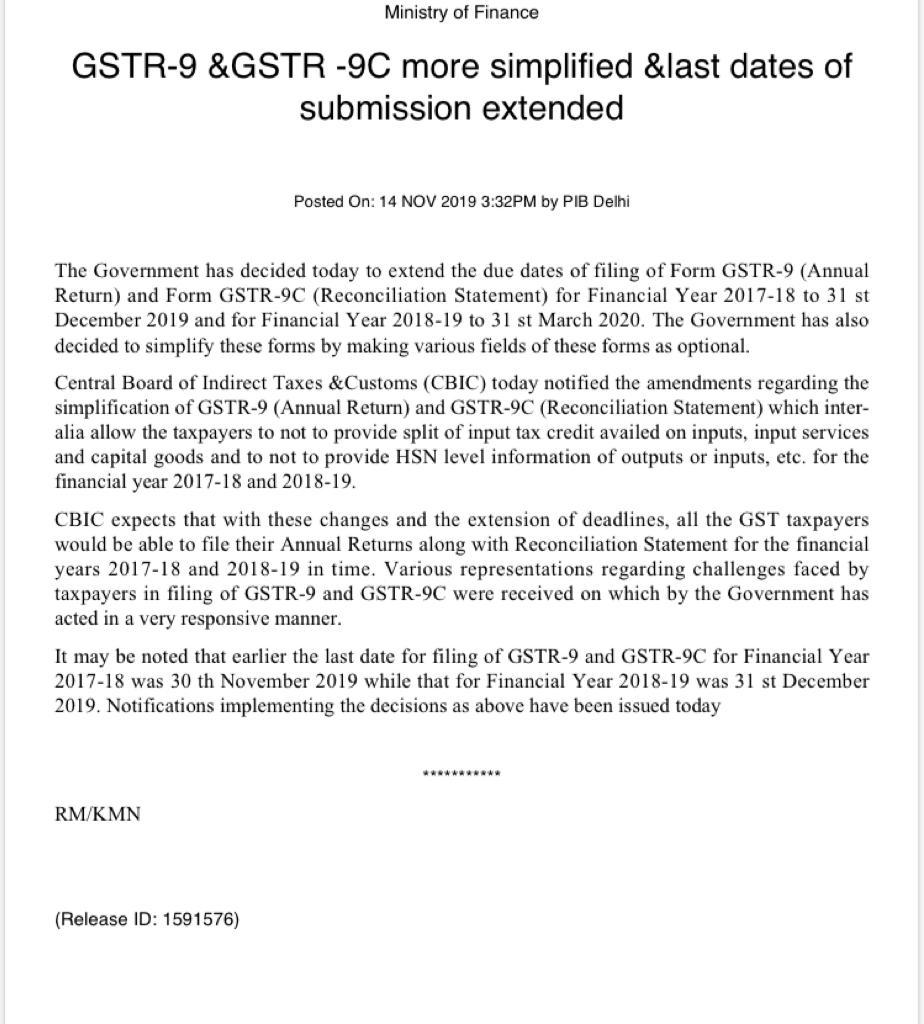
GST annual return due date for FY2017-18 to 31st December 2019. Also the due date for filing GST annual return for FY 2018-19 has been extended upto 31st March 2020. GST annual return must be filed by entities having GST registration and a turnover of over Rs.2 crores. GST Annual Return Due Date Gst Annual Return Due Date
Back to Learn

Frequently Asked Questions

Common questions about GST Annual Return Due Date for FY 2017.

The GST Annual Return is an annual filing requirement for entities registered under the Goods and Services Tax (GST) regime in India. It is a comprehensive document that consolidates all the monthly or quarterly GST returns filed during a financial year. Entities with a GST turnover exceeding Rs. 2 crores are required to file the GST Annual Return.
The government has extended the due date for filing the GST Annual Return for the financial year 2017-18 to December 31, 2019. Similarly, the due date for filing the GST Annual Return for the financial year 2018-19 has been extended to March 31, 2020. These extensions provide additional time for businesses to comply with the annual filing requirements.
The government has extended the due dates for filing the GST Annual Return to provide relief to businesses and ensure smooth compliance. The extensions acknowledge the challenges faced by businesses in collating and reconciling data for the annual filing, especially during the initial years of GST implementation.
All entities registered under the GST regime and having an annual turnover exceeding Rs. 2 crores are required to file the GST Annual Return. This includes businesses engaged in the supply of goods and/or services subject to GST.
The GST Annual Return is a crucial compliance requirement as it provides a comprehensive overview of a business's GST transactions and reconciles the figures reported in the monthly or quarterly returns. It helps ensure accurate reporting and payment of GST and facilitates proper auditing by the tax authorities.
Failure to file the GST Annual Return by the due date may attract penalties and interest charges under the GST laws. The consequences may include late fees, fines, or other legal actions by the tax authorities, depending on the extent of non-compliance.
Businesses can prepare for filing the GST Annual Return by maintaining accurate records of their GST transactions throughout the financial year. They should reconcile their accounts regularly, ensure proper documentation, and seek professional assistance if required to ensure compliance with the GST regulations.
Yes, the GST Annual Return must be filed in the prescribed format and form as notified by the GST authorities. The format may vary depending on the type of business, the nature of transactions, and other factors. Businesses should refer to the official guidelines and instructions issued by the GST authorities for the correct format and procedure.
In certain cases, businesses may be allowed to revise or amend the GST Annual Return after filing, subject to the provisions and procedures specified by the GST authorities. However, it is advisable to file accurate and complete information initially to avoid any complications or penalties.
Businesses can find detailed information and guidance on filing the GST Annual Return on the official website of the Goods and Services Tax Network (GSTN) or the respective state GST authorities. Additionally, they can seek assistance from GST professionals, tax consultants, or authorized service providers for expert advice and support.